
Called to ‘encontrar la ramita verde’ – to find the green branch.
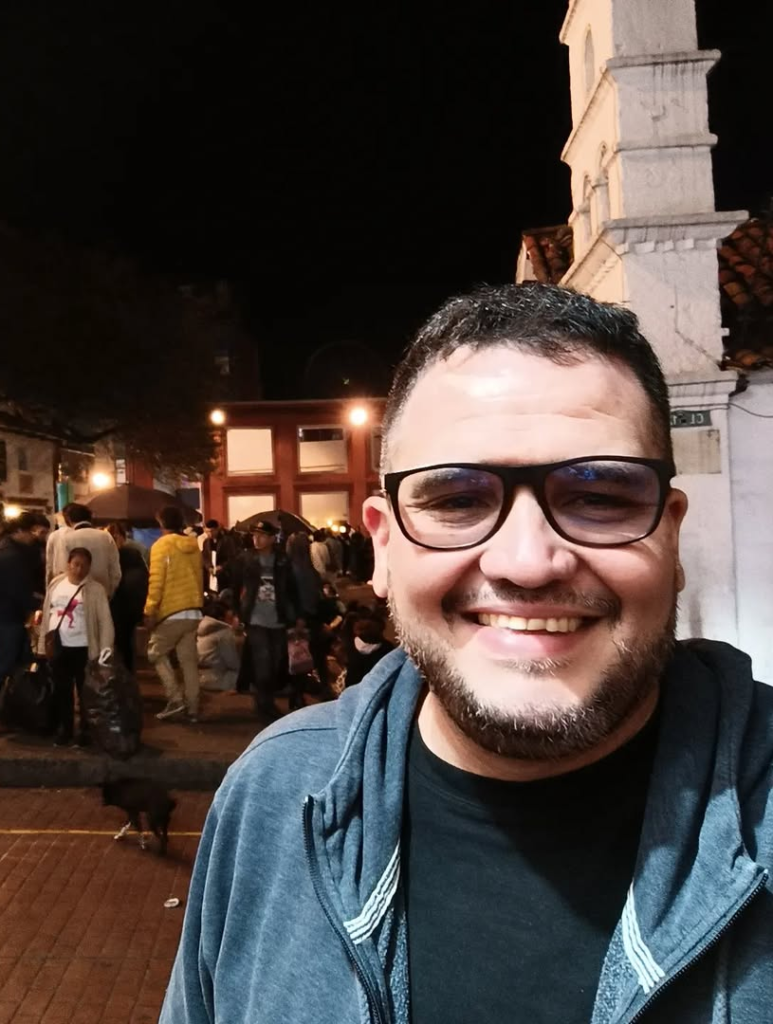
Fr. Danny Roque, S.J., a Cuban Jesuit, serves as the Executive Director of the Network of Loyola Centers in Cuba. Composed of six social centers located in the provinces of Havana, Cienfuegos, Camagüey, and Santiago de Cuba, this network provides “a space where bridges are built and new forms of dialogue and collaboration between Faith and Society are sought.”
Reflecting on the work of these centers during an interview in May 2025, Fr. Danny shared a beautiful metaphor he borrowed from Fr. Jorge Cela, S.J., who passed away in November of 2020.
“Fr. Cela founded the Loyola Centers, but he also had extensive international experience,” explained Fr. Danny. “He was the coordinator of Fe y Alegría, then later became the President of the Conference of Latin American Provincials… and he was really one of the original promoters of the social centers of the Society of Jesus throughout Latin America.” After this incredible life in service of the mission of the Jesuits, Fr. Cela returned to his native Cuba, and he would use this parable when he spoke about the work of the Loyola Centers that he had been so fundamental in establishing.
“He would say that when faced with situations that sometimes seem hopeless, we can often feel like we are in a desert. It seems like there is no future, it feels like we are just lost in the desert. In situations like those, Fr. Cela would say we were called to ‘encontrar la ramita verde’ – to find the green branch.”
Fr. Danny went on to explain this simple lesson, unpacking the wisdom of his own late Jesuit brother. “The Cuban people are almost all just focused on surviving,” Fr. Danny explained. “When you use all of your energy, all of your time, just to survive, it is very difficult to stop, reflect, and find that green branch.”
The Economic Desert Cubans Find Themselves In
The weight and complexity of the Cuban reality were apparent throughout Fr. Danny’s comments. Huge portions of the Cuban population live in situations of extreme poverty, and the economic and social foundations of the island are struggling to address the needs of the population. Massive increases in the cost of consumer goods and stagnant state wages mean that even people with jobs simply do not have enough to survive.
Fr. Danny offered this example: “If a surgeon earns six thousand pesos a month but he has to spend three thousand just to buy 30 eggs, how is he going to survive for the rest of the month?” This incredible disconnect between the state wages and the cost of living is driving Cubans to find new ways to sustain themselves and their families, exchanging goods and services outside of the normal economic structures just to get by. “This has produced a sort of collective consciousness,” Fr. Danny explained, “in which the community knows that the surgeon does not survive on his state salary.”
“I go to the doctor and I need an operation, I won’t have to pay anything at the front desk. Healthcare is still officially free in Cuba,” Fr. Danny explained. “If I bring a gift to that doctor, another gift for the nurse, another for the anesthesiologist, and another gift for the bed maid, I am ensuring that the doctor can continue to practice, the nurse can continue her practice, the anesthesiologist can continue working as well. They will continue to be able to offer me the service that I need. They are going to be able to survive not necessarily because of the salary they earn but, rather, because I need their services, I am going to guarantee through my gifts that they can continue to do their work.”
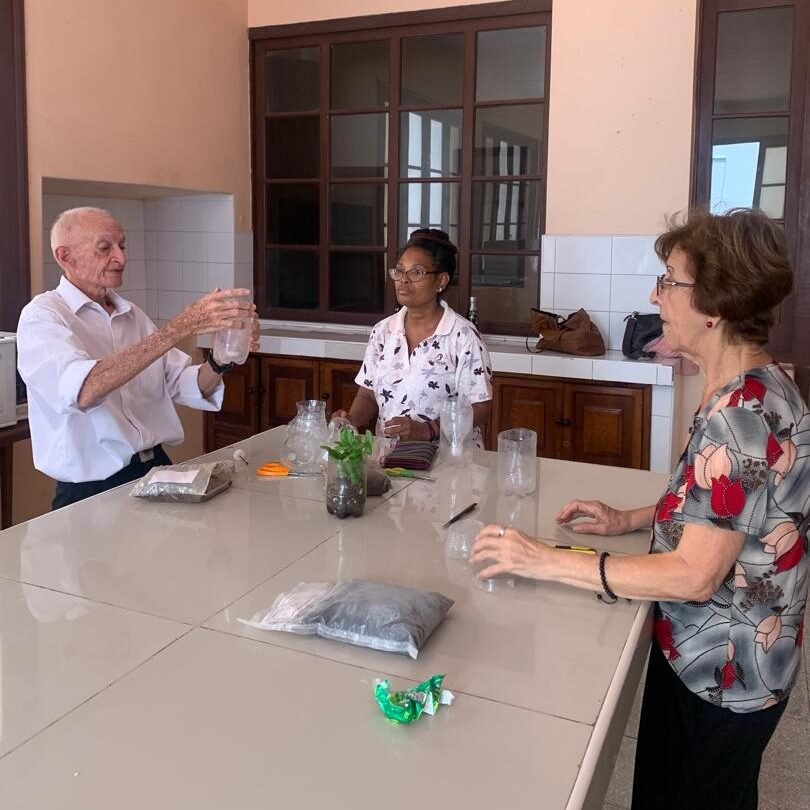
This whole system of informal economic activities is essential to the survival of Cubans, but it is also leaving large portions of the population behind. “In the Cuban context, those who are most vulnerable to being left behind are seniors,” Fr. Danny said. “They have little to offer in this informal economy. They no longer have physical strength to offer, but they also no longer have the capacity to accumulate goods or capital. They have been systematically impoverished for decades.”
This challenging context is the desert of hope and promise that Fr. Cela referred to. In this desert, Fr. Danny and his team at the Loyola Centers are doing their best to find creative, realistic responses that can truly change the lives of the people they serve. “Since their start, the Loyola Centers have been trying to be a source of positive change,” Fr. Danny shared. “We know that there are many things prohibited in this context. We know there are many things that won’t work in this context. We know there are many things that we are not allowed to try. But when there is a crack, when we can find a bit of space where we can do something, and when that something is able to produce a benefit for our people, that is where the Loyola Centers do our work.”
Responding With Hope, Opportunities, and Accompaniment
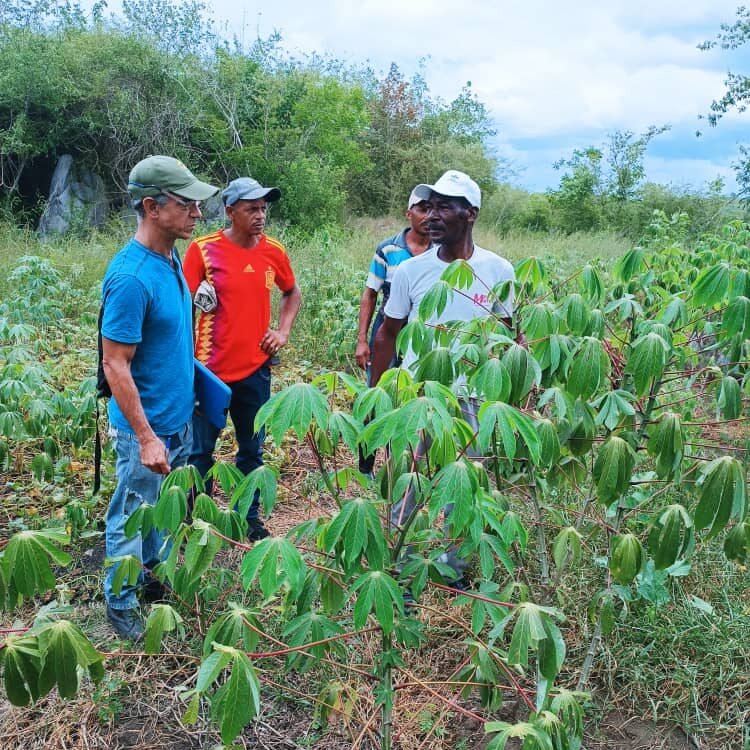
The Loyola Centers in Cuba are committed to providing crucial support to individuals, families, and communities experiencing severe economic and social hardships, exacerbated by inflation, food insecurity, and migration. This mission has called them to programs that respond to the real needs of the Cuban people. Fr. Danny described the work of the Loyola Centers as being defined by two core elements. “Our commitment to an educational project… one which goes beyond the mere instruction of the population and moves towards the formation of the entire individual… and our commitment to the entrepreneurs and the private sector… which creates spaces for opportunities, for formation, for dialogue, and for interconnection between people in the private sector so they might grow.”
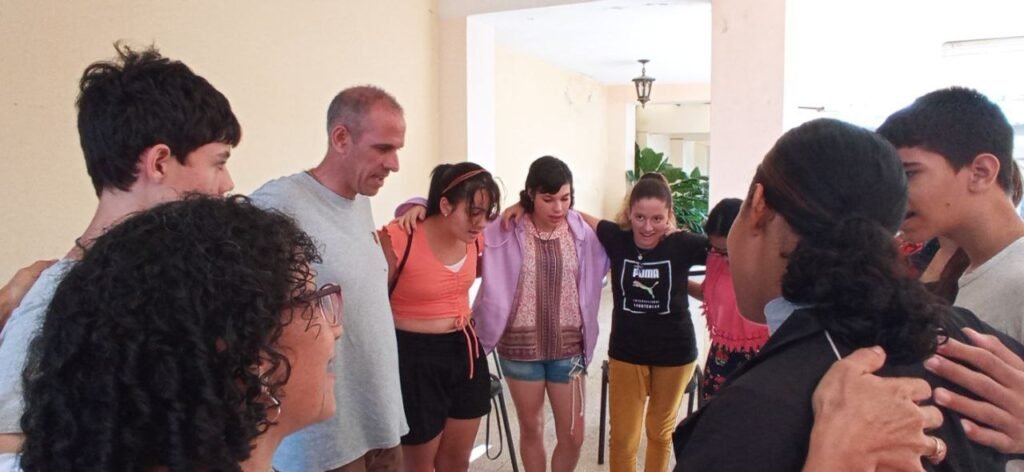
While it is true that millions of people are leaving this stark reality in search of brighter futures elsewhere, Fr. Danny and his team remain committed to those who remain. “The Society of Jesus, and the Loyola Centers as a work of the Jesuits, have decided that we will accompany those who stay in Cuba. However, we are not accompanying them as passive actors in this reality, but rather as individuals who are protagonists in their own lives.”
Reflecting on this work and the impact that the Loyola Centers have in their communities, Fr. Danny returned to the metaphor he once heard from Fr. Cela: “Some of us have the privilege, because this is our work, to move a bit slower and find that green branch and show it to others,” said Fr. Danny. “We can help that green branch to flower and bring new fruit… This might just be a metaphor, but I think it guides what we are trying to do here in Cuba.”
