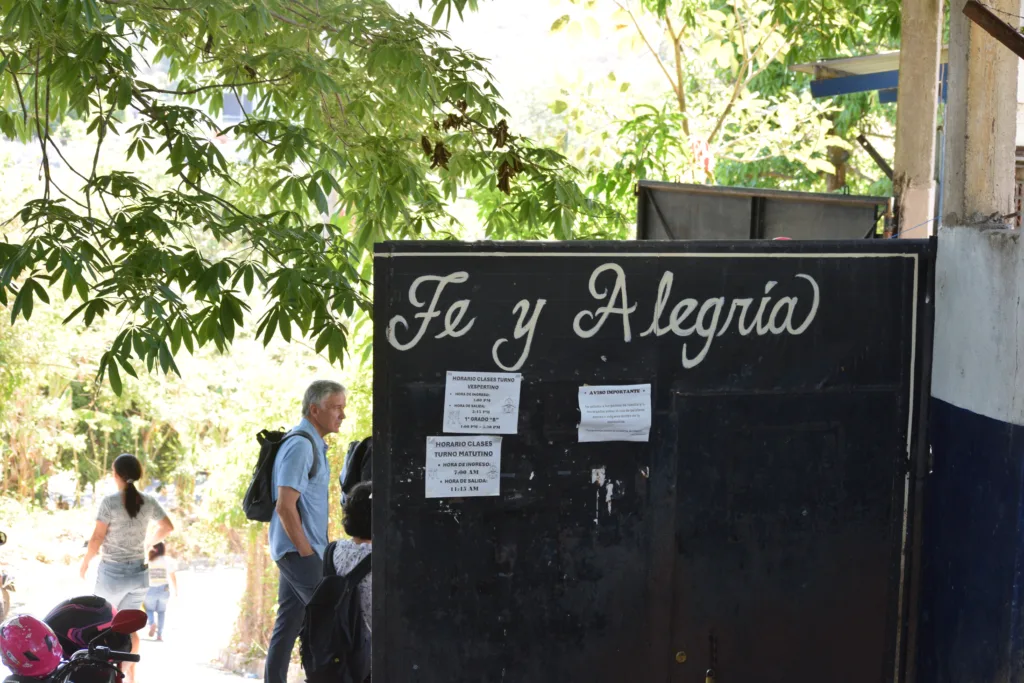
During our visit to El Salvador, staff and board members of American Jesuits International spent a full day with Fe y Alegría El Salvador, experiencing firsthand how the movement continues to respond to the realities of exclusion through education and formation. Alejandro Calderón, director of Fe y Alegría El Salvador, and members of his team accompanied us, sharing important context about their work and the social and cultural realities of the communities we visited. Throughout the visit, one message resonated at every stop: despite dramatic cuts to funding, our partners remain committed to providing meaningful, transformative education for students of all ages.
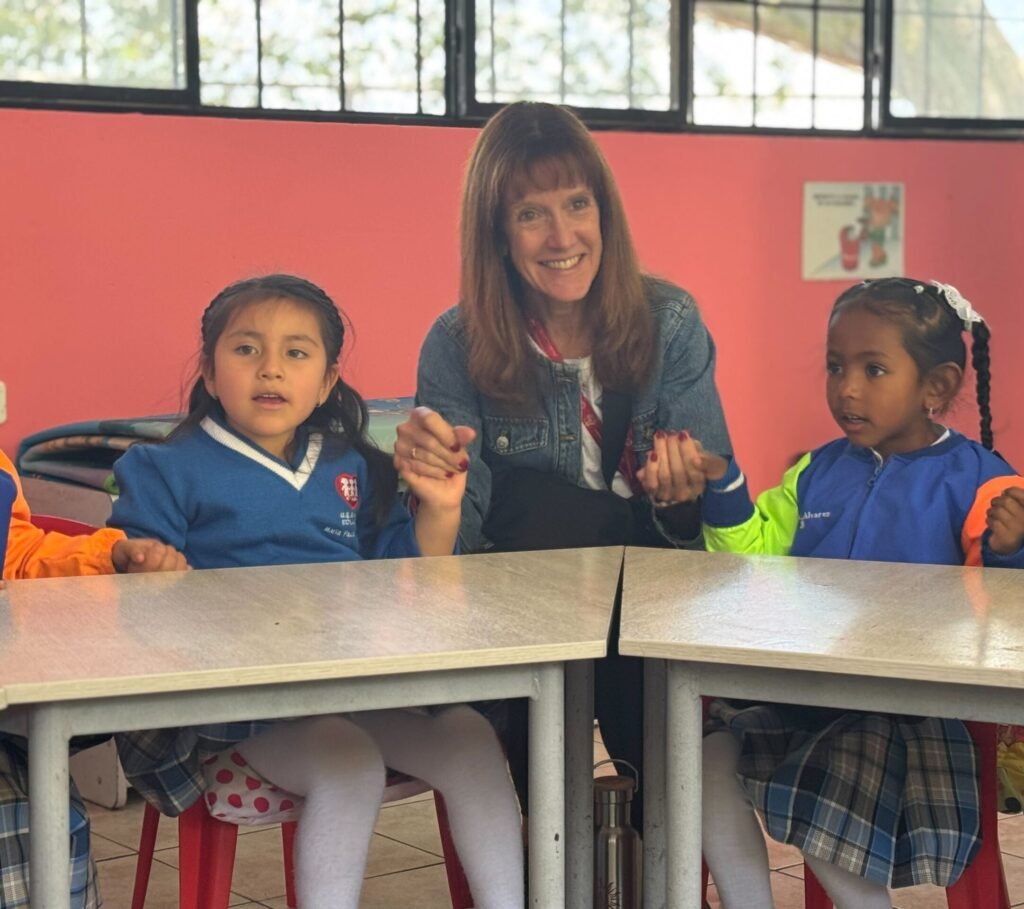
The day began early, driving through busy San Salvador traffic to a community north of the city. In the municipality of Apopa, the Las Flores neighborhood is home to the Complejo Educativo Fe y Alegría San José, a rural primary school supported by Fe y Alegría. There, students welcomed the group with testimonies, performances, and reflections that brought the life of the school into focus.
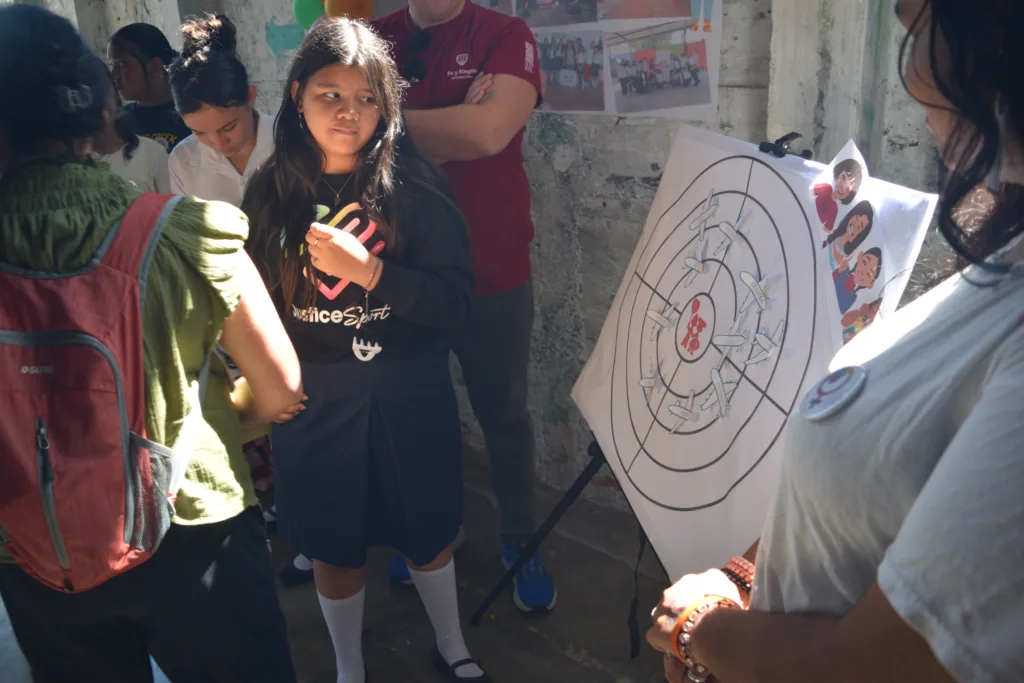
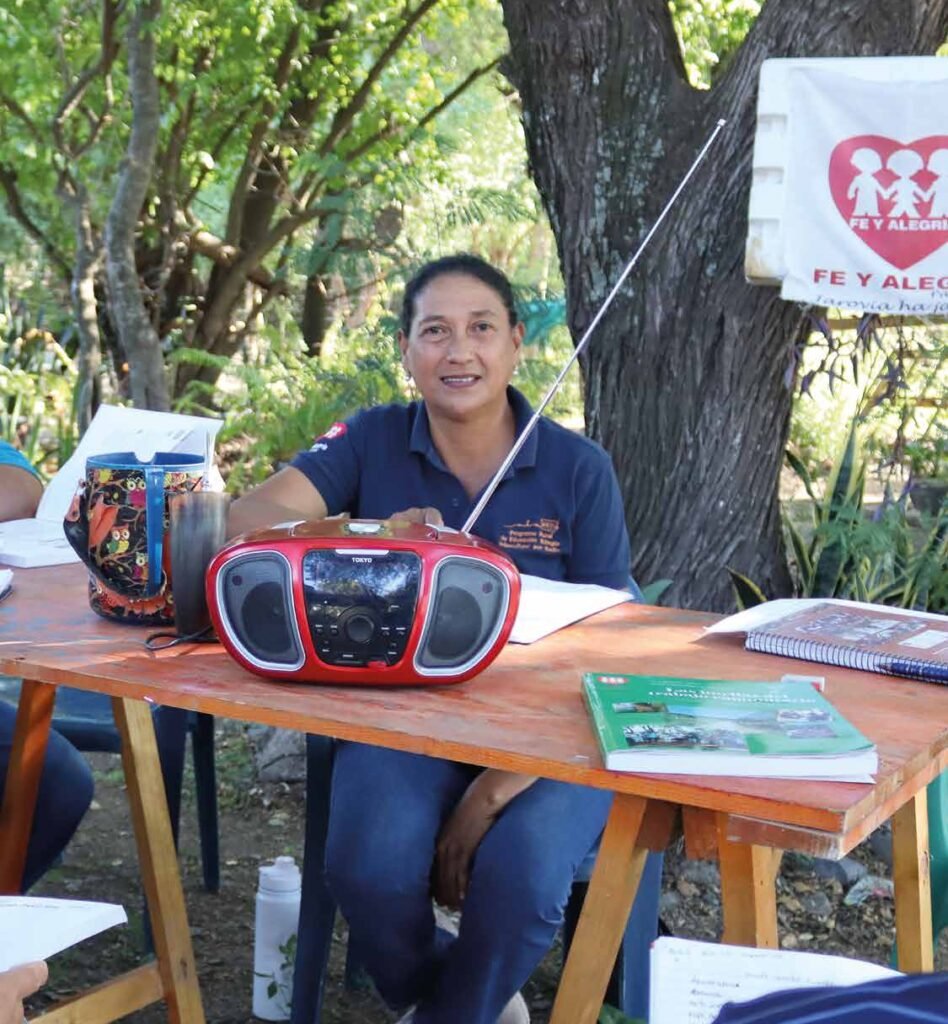
When the team arrived, a group of young women shared their experiences in the Luz de las Niñas program (“The Light of the Girls” in English). The students described how the initiative has helped them build support networks, process personal challenges, and grow in confidence. They used visual aids to show how knowing their rights has enabled them to build networks of support and advocate for themselves. “You see, now that we have heard from each other, we are on each other’s radar as well,” one young woman told us. “We are connected, and we know who we can reach out to if we need support.” Their testimonies highlighted the importance of spaces where young people, especially young women, can be heard and affirmed.
Unfortunately, the Luz de las Niñas program was directly impacted by cuts to U.S. foreign aid last January. One of the largest programs supported by Fe y Alegría El Salvador, participation has fallen by up to 80 percent because resources are no longer available to sustain it. At the Complejo Educativo Fe y Alegría San José, for example, Fe y Alegría can no longer provide the salary of the school’s counselor, who previously led the program. Now, a few committed volunteers and former participants are keeping it afloat as best they can.
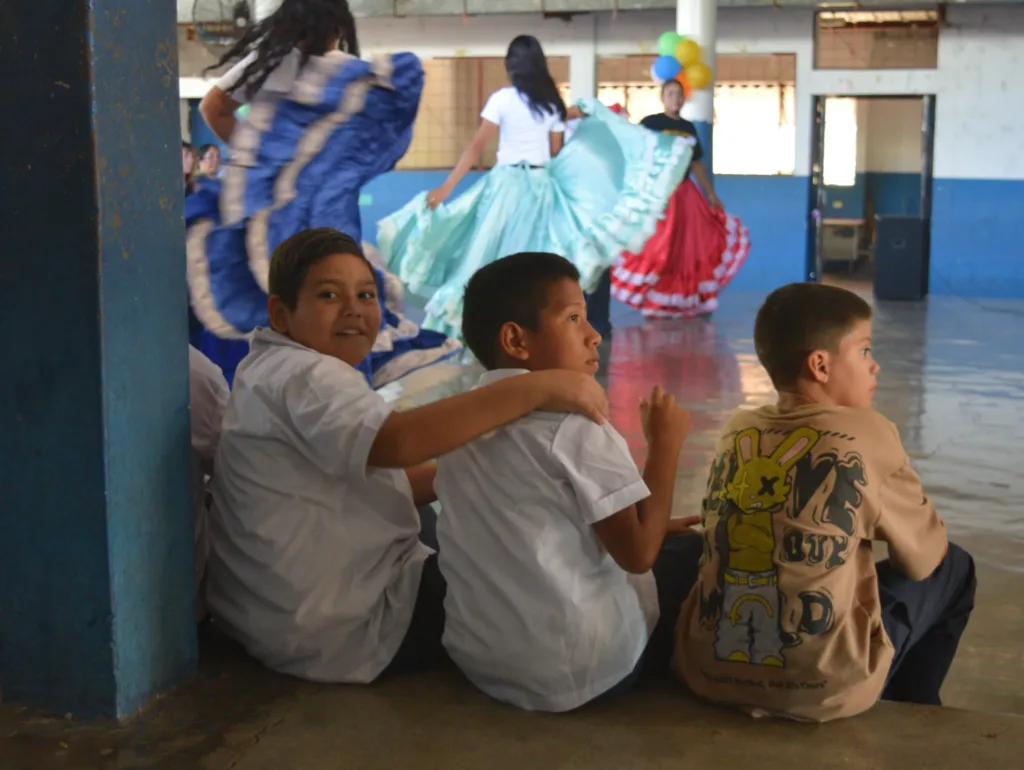
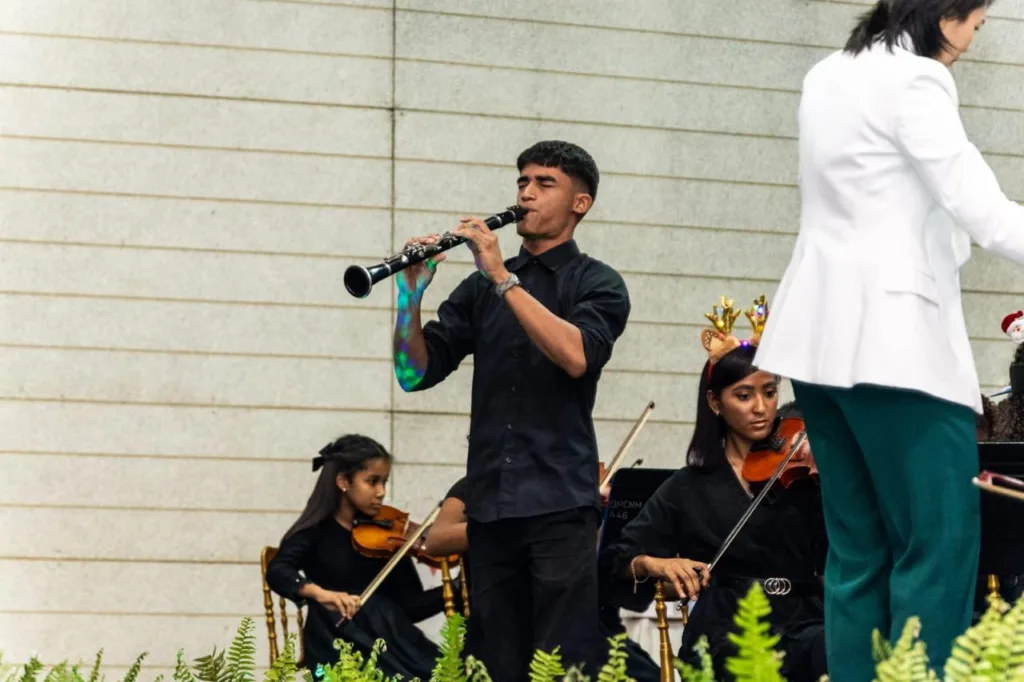
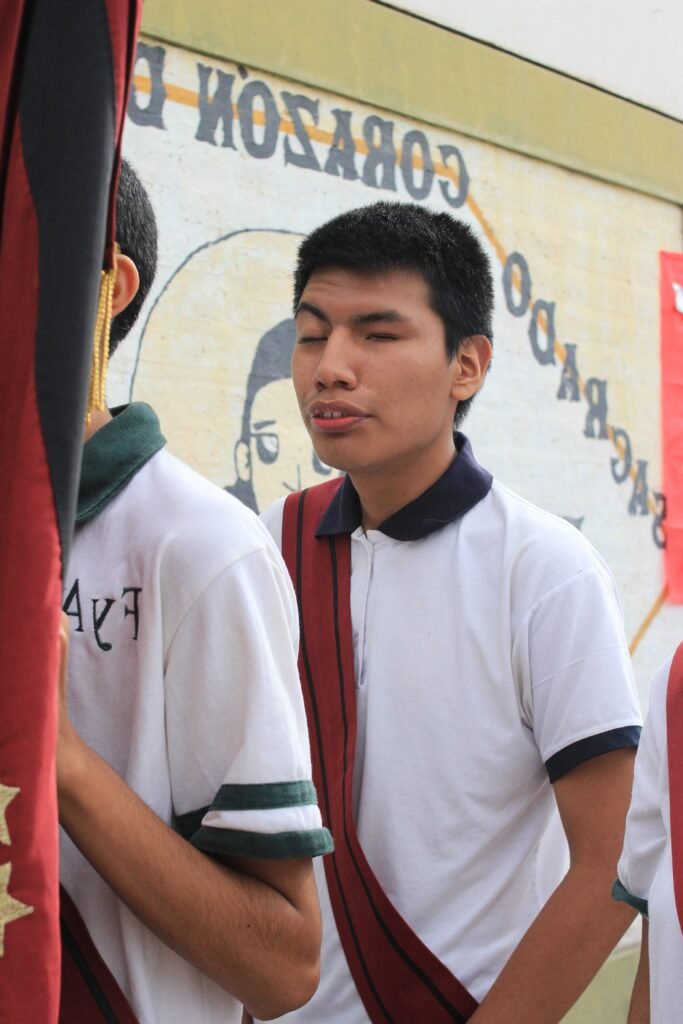
After this presentation, our group was given front-row seats to an impressive showcase of the school’s extracurricular programs. Students demonstrated their talents through dance, music, taekwondo, and poetry—expressions of both creativity and community. Administrators and teachers also spoke candidly about the school’s role as a pillar in the community, its history, and Fe y Alegría’s long-standing commitment to promoting quality, inclusive education in the area.
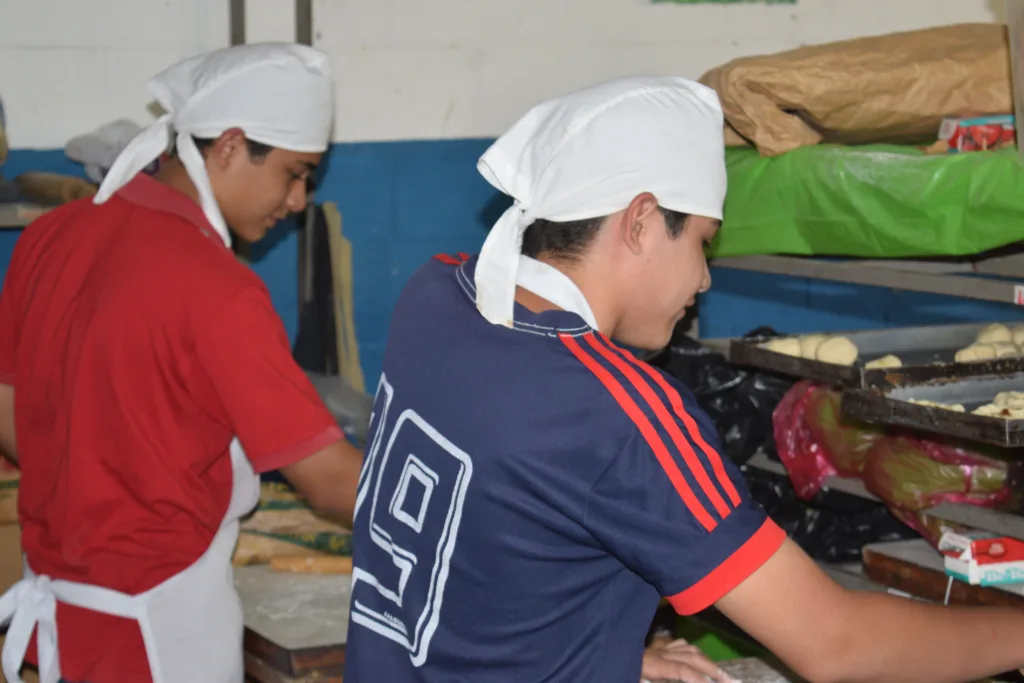
One of the most innovative initiatives at the school is a baking and pastry workshop for students and recent graduates. Launched just a few years ago, the workshop has already proven successful, offering participants the opportunity to learn baking, pastry, and confectionery skills. One student reflected on the program’s impact: “I am also learning responsibility and timeliness. We have to be up early to get the bread fermenting, and if I am late getting the dough started, I won’t be able to bake in time.” Students also take the lead in selling their products locally, generating income for the school while strengthening their sense of ownership and initiative.
After saying goodbye at the school and returning to the city, we visited a different educational model that is also essential to Fe y Alegría El Salvador’s mission. In the afternoon, the group visited the Zacamil Formation and Development Center, one of three vocational centers currently operated by Fe y Alegría in El Salvador. At these centers, young people and adults receive training in fields such as culinary arts, bartending, and hospitality, helping them find meaningful work in their communities.
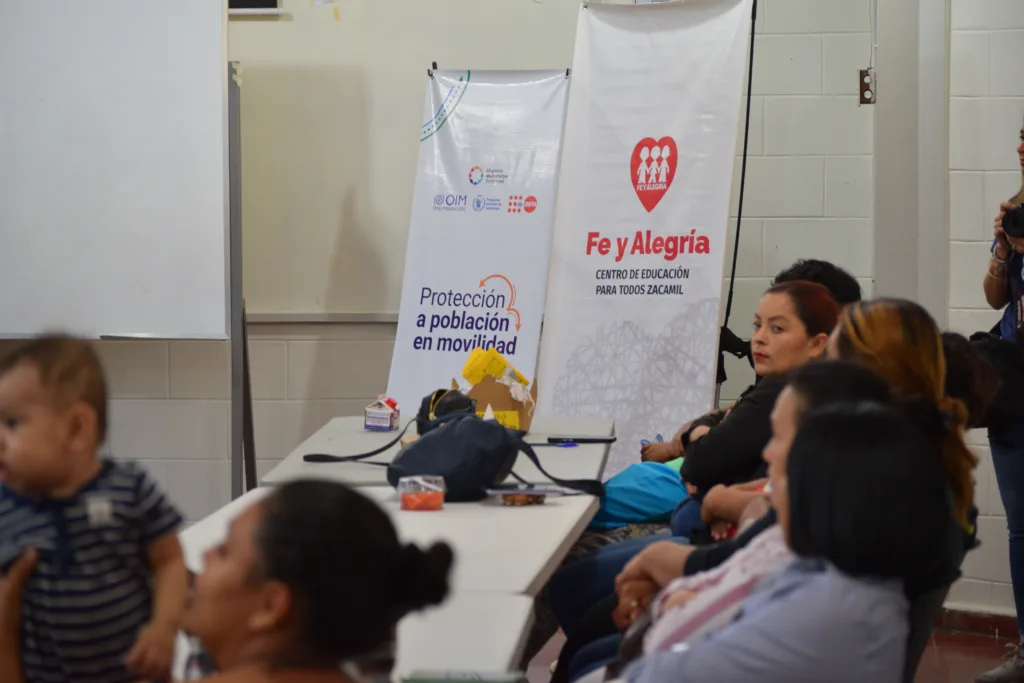
Fe y Alegría’s vocational programs are designed not only to provide technical skills but also to develop the soft skills essential for employment. Participants learn discipline, communication, and teamwork—skills that often make the difference in securing and sustaining meaningful work. “We hear it from a lot of employers,” one educator explained. “It is easy to learn the task of cooking, but to know how to be in a kitchen, how to interact with others—that keeps our students employed.”
Among the programs we visited was a training initiative for migrants recently returned from abroad, primarily from the United States and Mexico. Reintegrating these individuals can be particularly challenging, as they often need immediate employment and cannot afford lengthy training programs. In response, Fe y Alegría offers flexible certification pathways that allow participants to validate their skills quickly through practical assessments, helping them reenter the workforce more efficiently. These programs both certify skills gained abroad and affirm the dignity and lived experience of each individual.
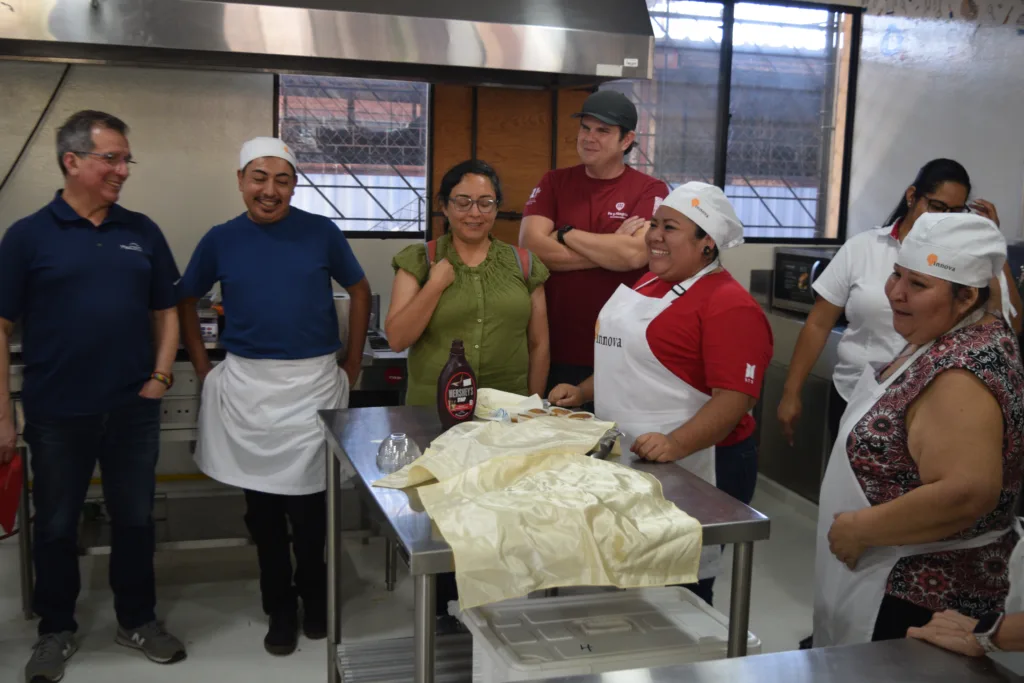
Nearby, our partners welcomed us into a well-equipped industrial kitchen. There, students in the international cooking class demonstrated techniques and dishes they had learned to prepare. Delicious sandwiches, sweets, and coffee accompanied a meaningful conversation with the students. From industrial-scale mixers to a proofing oven, participants train using the same tools they will encounter in professional kitchens—equipment made possible through international support for Fe y Alegría. In addition to those pursuing careers in professional kitchens, some students shared their hopes of incorporating healthy cooking practices into their own small businesses.
After visiting additional workshops and classrooms, our group gathered to reflect on what we had seen and to hear more from Alejandro about the challenges facing Fe y Alegría El Salvador. Despite the encouraging testimonies shared throughout the day, our conversation again turned to the impact of international funding cuts. Of the five vocational centers previously operated by Fe y Alegría, two have closed due to reductions in U.S. foreign aid. Across the campus, signs of global solidarity were visible, with logos and plaques recognizing the support of numerous foundations, NGOs, and governments. Still, the loss of multiple USAID contracts has had a profound impact: a center that once served more than 1,200 people now reaches only 200.
Despite these challenges, Alejandro left us with a clear message: Fe y Alegría El Salvador remains committed to its mission. The organization is developing new programs and diversifying funding sources. It is adapting vocational training to respond to the country’s growing tourism industry. It has sold vehicles, rented unused classrooms, and restructured operations to continue serving as many students as possible.
“Fe y Alegría El Salvador was founded in 1969 by Fr. Joaquín López y López, S.J.,” Alejandro explained. “Since then, we have endured a civil war, a global recession, the pandemic, and dramatic shifts in national and international policy. But we are still here—and we will remain here, with our students and in our communities.”
Throughout our day with Fe y Alegría El Salvador, their mission was clear: to reach the margins with quality education and to accompany individuals as they build paths toward dignity and opportunity. It was an incredible day.