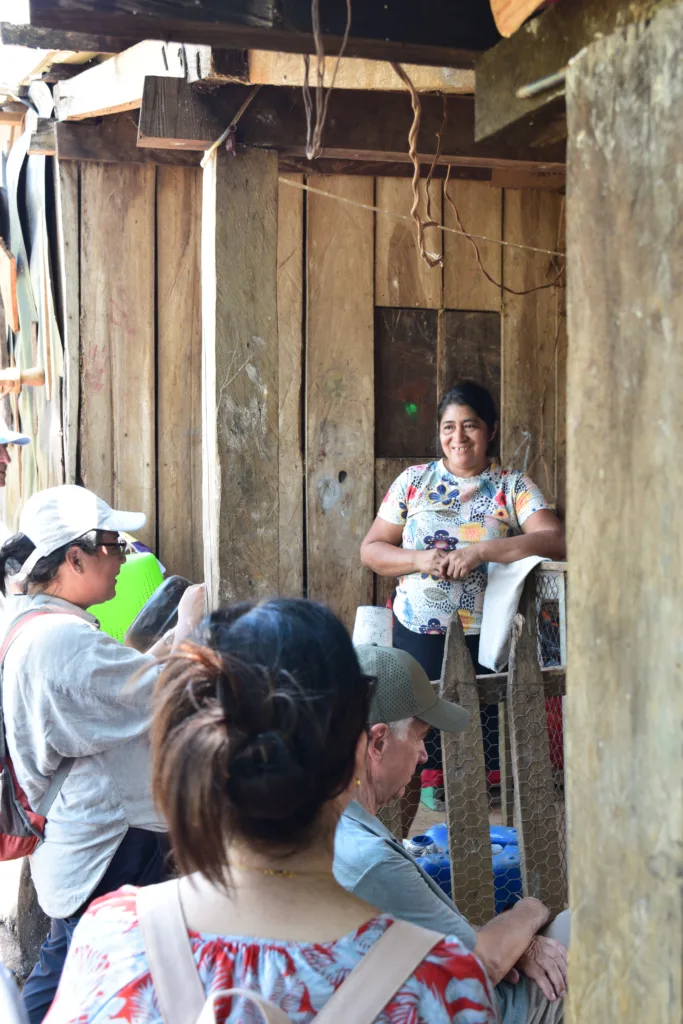
“I am a single mother of five. Thanks to the Cerro de Dios Cooperative, I have been able to support myself and my family.”
Silvia Ramos had been with us throughout the morning, but when the time came for her to speak about her own experience, she seemed to step forward from the group. She welcomed us into her home in Teotepeque—a humble house built from wooden planks and covered with a corrugated steel roof. With views of volcanoes in the distance, she lives hours from the busy city of San Salvador, in a rural and rugged part of La Libertad Costa. Along the back of her house, clothes hung to dry in the sun, and a small chicken scurried away from its coop.
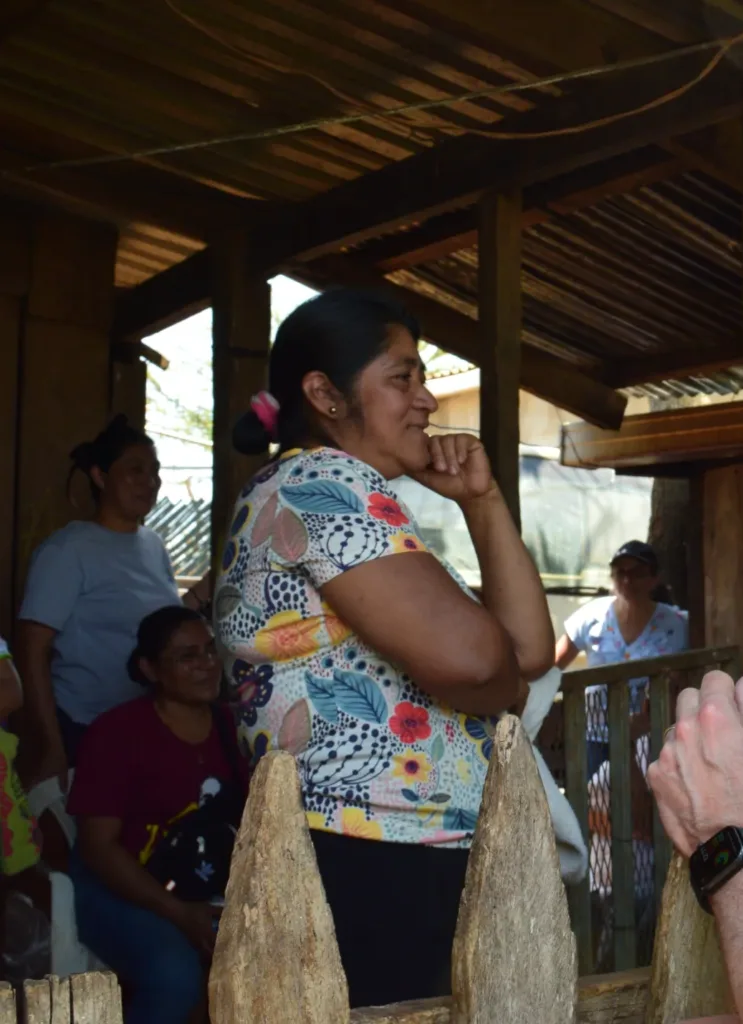
Silvia spoke openly about how much her life has changed in recent years. “I was very shy when I first joined the women’s group,” she told us. “I didn’t think I had much to share, and my partner had told me the meetings were a waste of my time. But look at me now.”
Those meetings were part of a savings group organized by the Cerro de Dios Cooperative. Founded in 2017 as a women’s savings group, the cooperative has grown steadily with the accompaniment of Solidaridad CVX, an initiative of the Jesuits in El Salvador. What began as a small effort to build financial security among a handful of women has developed into a community of more than 100 families that provides access to training, shared capital, and opportunities for members to invest in their own livelihoods.
The cooperative has helped Silvia grow both economically and personally. The savings group meetings gave her a space away from her partner where she could participate, listen, and eventually speak. As her small savings grew, so did her sense of confidence. Over time, she began to find her voice, share her story, and develop a stronger sense of self and belonging.
With support from Solidaridad CVX, she received a small loan to begin raising chickens. Through the cooperative’s “first-time loan” model, which is supported through international solidarity, she was only required to repay 25 percent. That incentive helps participants to take an initial step without the full burden of repayment while also strengthening the cooperative. The portion of the loan that is repaid stays within the cooperative, strengthening a shared pool of resources that can be redistributed to others.
Using this support, Silvia began building a small project at home. With help from neighbors, she constructed a chicken coop and started raising a flock.
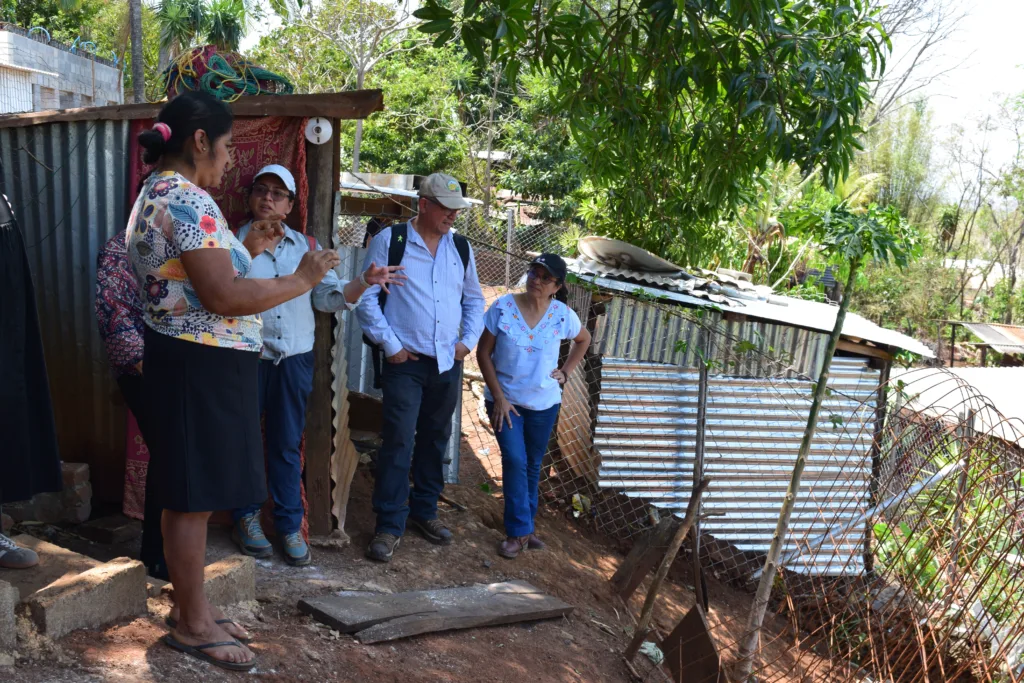
“These are creole chickens,” she told us. “They are not as large as other breeds, but they have more flavor and are easier to maintain.” Silvia had initially tried raising chickens for eggs but found it difficult to provide the consistent feed and water they required. Through the cooperative, she learned to adapt her approach, choosing a breed and method that better fit her circumstances. This kind of practical knowledge—shared among members—is central to the cooperative’s success.
Continuing the tour of her small plot of land, Silvia pointed out a young mango tree planted with support from the cooperative. “We think it is a macho,” she said, noting that it has not yet produced fruit. Not every effort yields immediate results. Still, the tree remains part of her longer-term vision—an investment in the future, even if uncertain.
As Silvia spoke about the cooperative, she reflected not only on the opportunities it had given her, but also on how she had grown personally in the process.
“My former partner told me I would never achieve anything,” she said. Then, looking at our group—visitors who had traveled to learn from her experience—she added, “But look at me now,” repeating the phrase with pride.
Her words were simple, but they carried the weight of everything she had overcome.
Look at her now: a single mother of five, raising chickens, planting mango trees, and participating actively in a cooperative that continues to grow. Through the Cerro de Dios Cooperative and Solidaridad CVX, Silvia has gained more than access to capital. She has found a community, developed financial and agricultural knowledge, and discovered her own voice.
Across El Salvador and throughout Latin America, the Comparte network supports initiatives like this—local efforts that promote alternative economic models rooted in solidarity, sustainability, and human dignity. These initiatives are often small in scale, but their impact is deeply personal and far-reaching.
In Silvia’s case, a modest loan and a supportive community are helping build a brighter future for her whole family.