During our trip to El Salvador, the staff and board of American Jesuits International was able to spend an entire day visiting with and learning about the work of one of our strategic partners: the Comparte Network. A network of the Jesuit Conference of Provincials in Latin America and the Caribbean (CPAL), Comparte brings together 18 social centers that collaborate with local cooperatives, community organizations, family farms, and other grassroots initiatives. Since its founding in 2010, the network has fostered a community of learning and action, working alongside producer organizations and allied entities to promote economic initiatives rooted in social and solidarity economies, agroecology, food sovereignty, and the values of the feminist movement.
In El Salvador, the Comparte network social center is Solidaridad CVX, an organization that supports rural families seeking to build more equitable and inclusive livelihoods. Through shared learning opportunities and access to capital, Solidaridad CVX accompanies multiple cooperatives across the country which promote locally rooted agricultural production, savings initiatives, and community-led development.
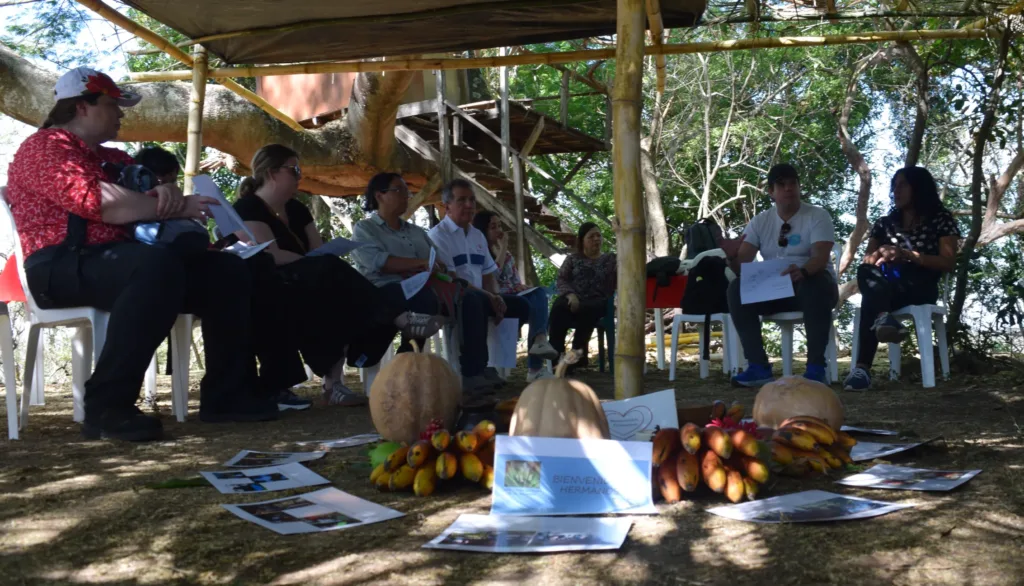
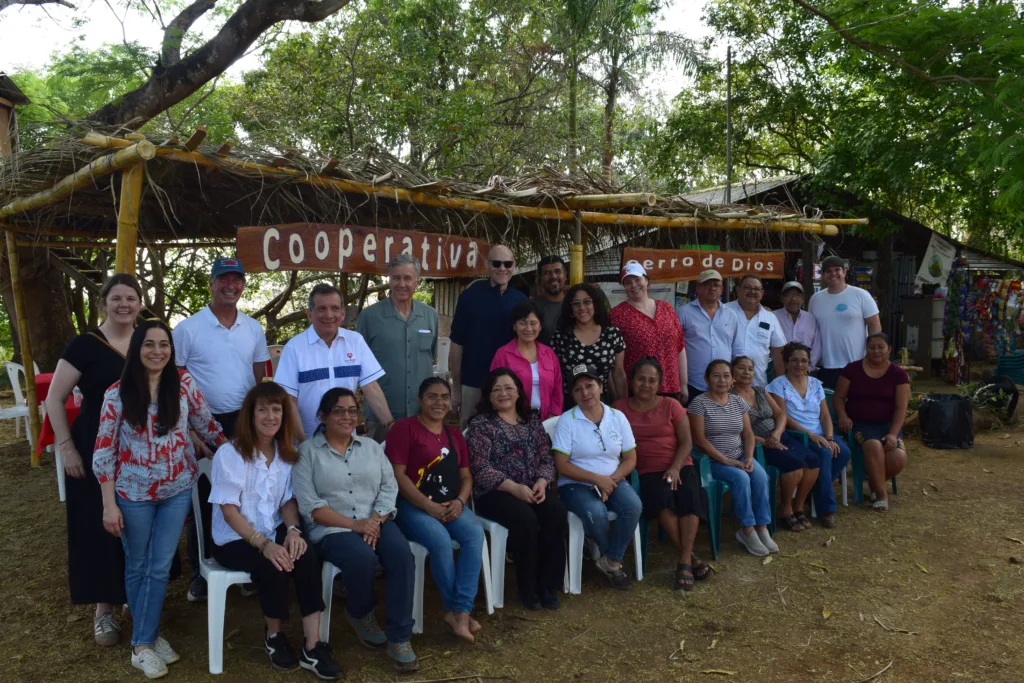
Traveling more than an hour from San Salvador, our group made its way along the coast to Teotepeque, in La Libertad Costa, to visit the Cerro de Dios Cooperative. Upon arrival, we gathered around an “altar of thanksgiving,” where our hosts presented the wide variety of agricultural products cultivated in the region. From seeds to fruits and vegetables, community members explained how the altar reflected both the biodiversity of the area and the deep ecological knowledge the cooperative has developed and shared among its members.
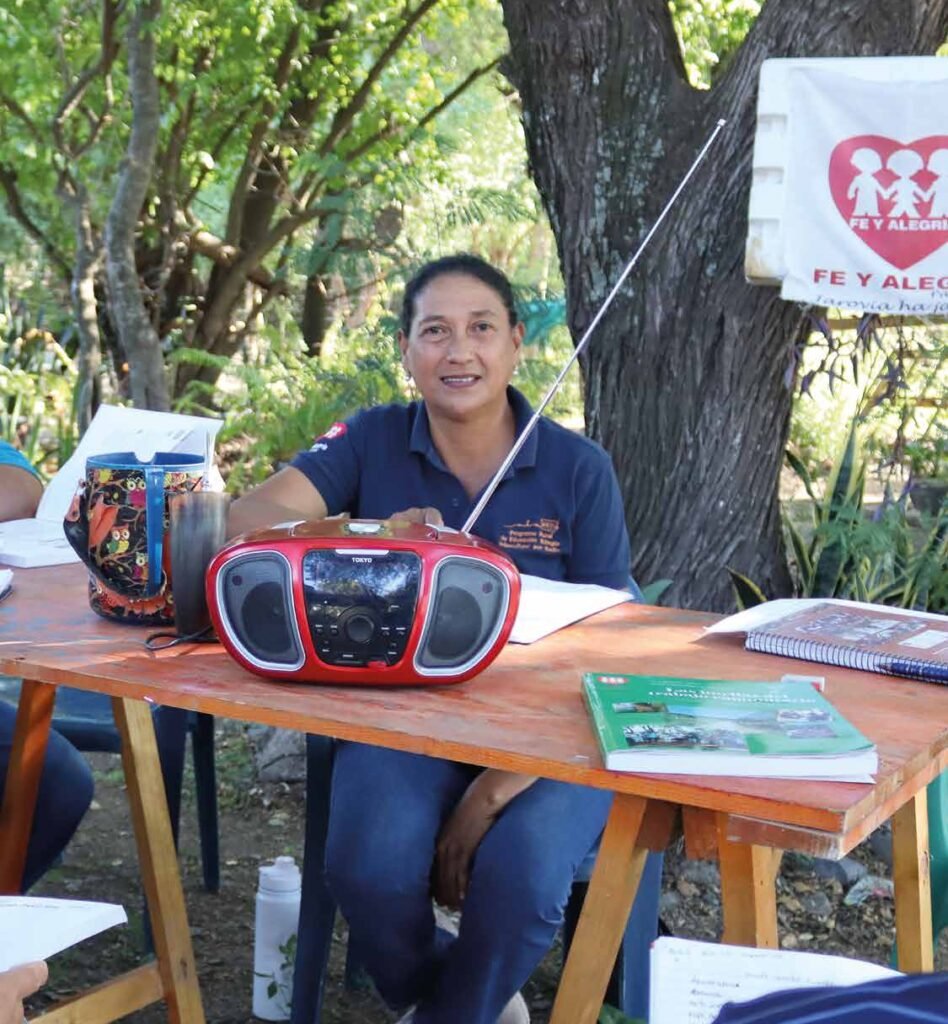
As the presentation continued, we learned about the history of the cooperative and the challenges and opportunities its members have faced. Founded in 2017 as a women’s savings group, the Cerro de Dios Cooperative has grown significantly with the support of Solidaridad CVX. Today, it provides members with access to small grants, averaging just $300, that allow them to invest in initiatives such as raising chickens, planting new fruit trees, or expanding existing projects.
Thanks to support from Solidaridad CVX the cooperative is able to offer a particularly useful “first time loan” program through which participants are only required to repay 25 percent of their first loan. The funds for these loans have been acquired through international solidarity programs and they support individuals and the community more broadly as well. The portion that is repaid stays within the cooperative, allowing the community to generate shared capital that they can redistribute in secondary loans and initiative. Alongside community-managed savings accounts and training programs, this model strengthens financial literacy, expands access to capital, and reinforces community ties.
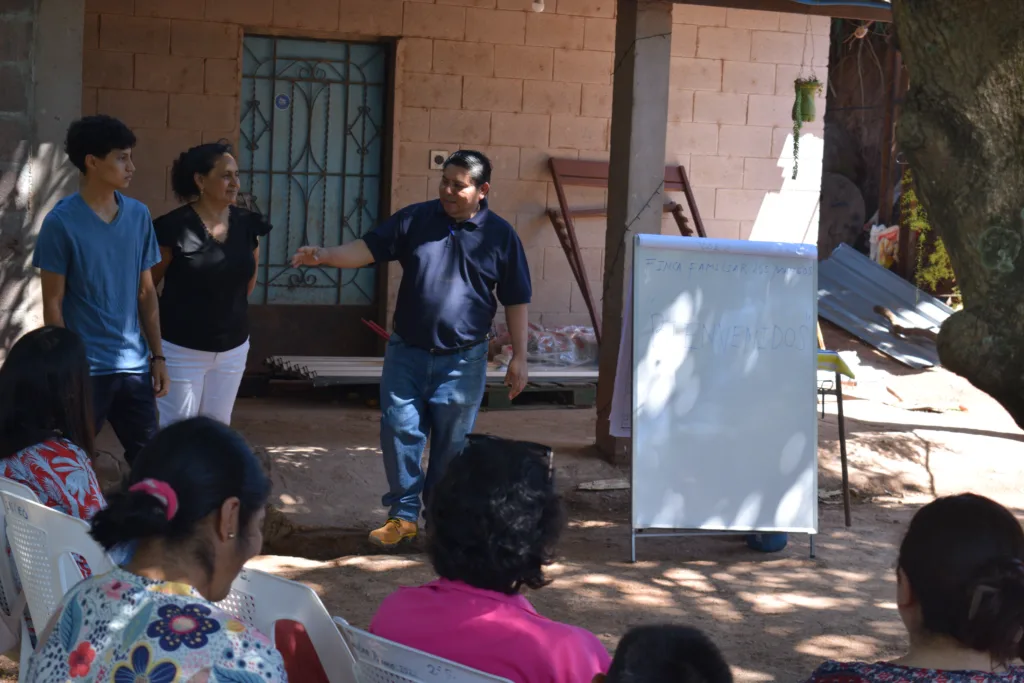
The true story of this cooperative, and so many others like it, can only truly be understood through the lives of those impacted by these programs. The importance of the work Solidaridad CVX and other Comparte members do is best understood through the people they support. With that in mind, our group set out to visit several plots managed by cooperative members.
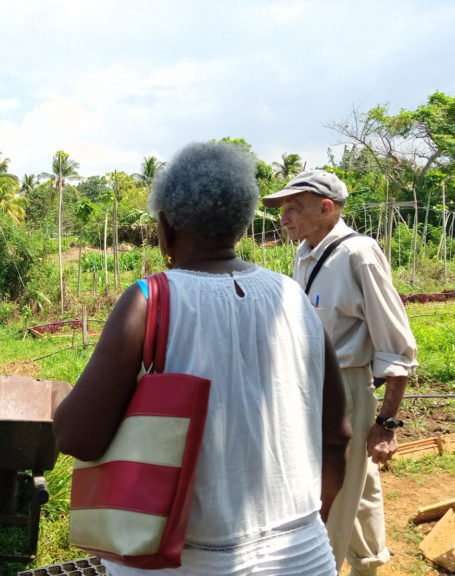
Our first stop was the agroecological finca of the Orellana family. Upon arrival, Jaime Orellana offered an overview of the land he and his family cultivate using sustainable, forest-based farming techniques. From coffee and honey production to nearly 30 varieties of fruit trees, the finca is both a source of nourishment for the family and a contributor to the cooperative’s local market.
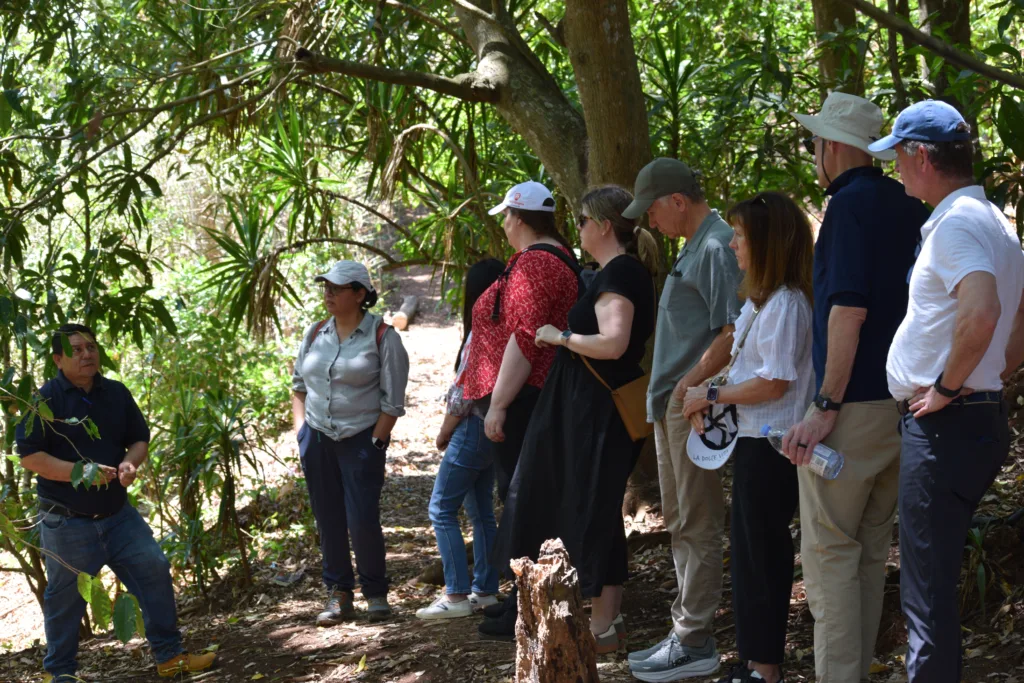
Walking along narrow paths through the property, we saw how different crops and trees support one another. Taller fruit trees provide shade for coffee plants, while bamboo reinforces the hillside and prevents erosion. Every square meter of land was accounted for and Jaime still had plans to continue developing. At the end of our tour, he showed us a well that had recently been finished. Hand dug and over 15 meters deep, the new project will ensure access to clean water for both his family and his crops.
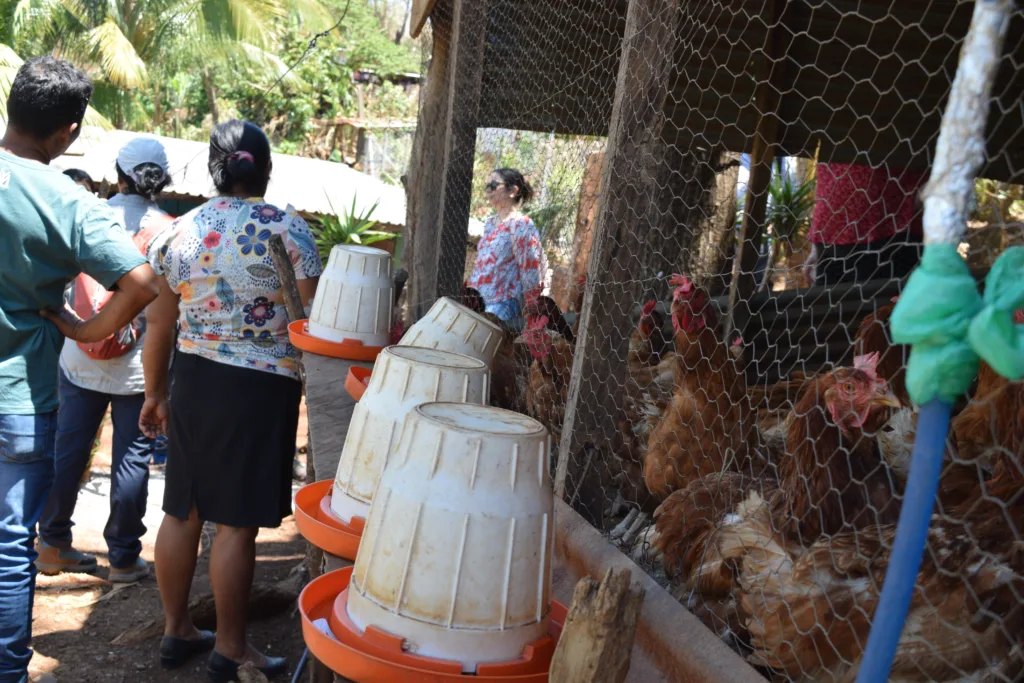
The Ramos family was the second stop on our visit. Juana and her daughter have transformed a small seed investment into a thriving poultry operation that provides a steady source of income. Starting with just a few chickens, the Ramos matriarchs now raise dozens. Although the dry season presents ongoing challenges, they are able to produce eggs and raise chickens for meat, thanks to their initial loan and continued reinvestment through the cooperative’s savings program.
Savings and entrepreneurship have become intergenerational practices within the family. Juana joined the cooperative in its early days, and her daughter soon followed. Now, a third generation is involved through a children’s savings group. “When they received their first interest payment,” Juana’s daughter shared, “one of my daughters decided to buy a box of hair bands to sell at the cooperative store. She knew her friends would want them, and she has been selling them there.”
This community-based model extends beyond economic opportunity. It creates spaces for learning, collaboration, and personal growth—something that became even more evident during our final visit of the day.
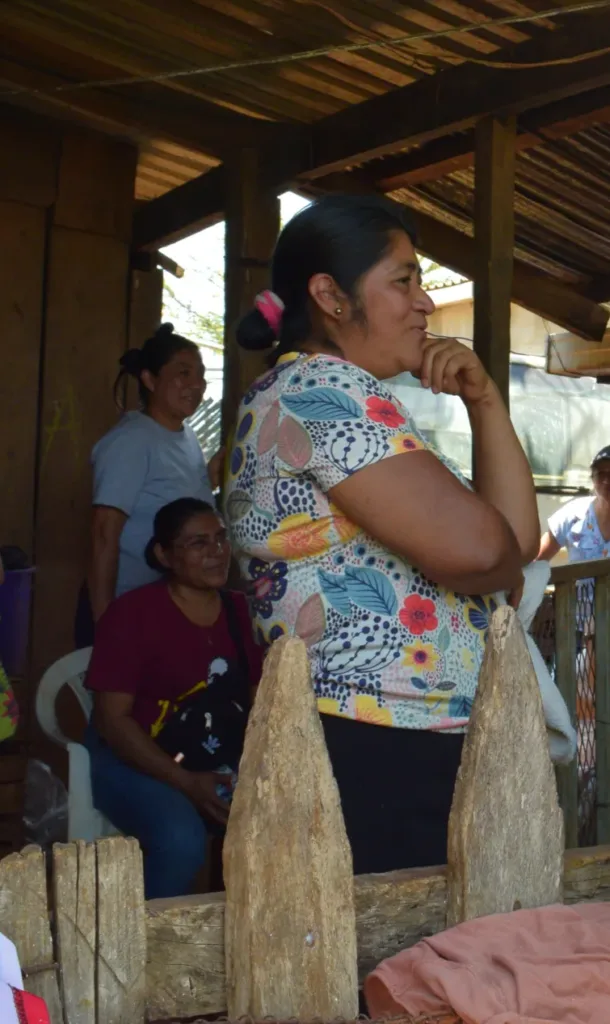
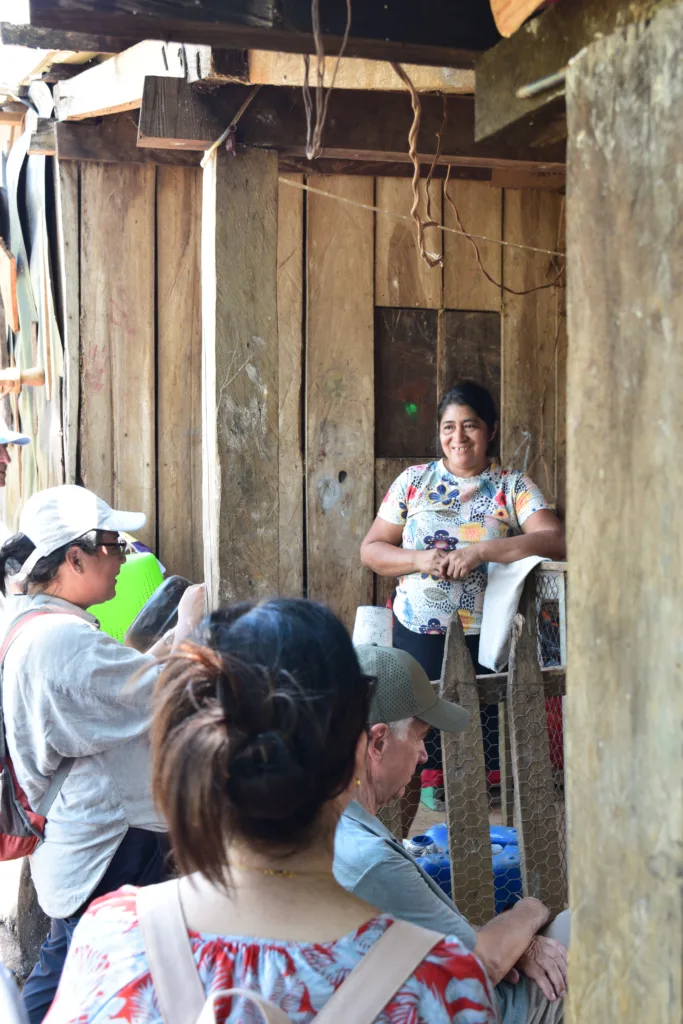
Just a short walk away, Silvia Ramos welcomed us into her home. A single mother of five, Silvia spoke with pride about her journey. “My former partner told me I would never achieve anything when I started attending the savings group meetings,” she shared. “But look at me now.”
With support from the cooperative and Solidaridad CVX, Silvia received seed funding to begin raising chickens as well. As a first-time participant, she was only required to repay 25 percent of the loan. With help from neighbors, she built a small chicken coop and began planting fruit trees on her property. While her operation is modest, it represents a meaningful step toward stability and independence.
“These are creole chickens,” Silvia explained. “They are not as large as other breeds, but they have more flavor and are easier to maintain.” Practical knowledge like this—shared among cooperative members—plays a crucial role in ensuring the sustainability of each project.
After a long day in the field, our group returned to the Cerro de Dios Cooperative store, where we were treated to a meal prepared with locally sourced ingredients. Roasted creole chicken, raised by members of the cooperative, was served alongside other regional fruits and vegetables. Cooked over an open flame, the meal reflected the value of local production, shared knowledge, and community-based economic development.
Throughout the day, the work of Comparte and Solidaridad CVX came into clear focus: accompanying communities as they build sustainable livelihoods rooted in dignity, solidarity, and care for the land. It was a powerful testament to what is possible when communities come together to learn, invest, and grow.