Context
Nicaragua’s South Caribbean Coast Autonomous Region (RACCS) is one of the most culturally diverse parts of Central America, home to Mestizo, Afro-descendant, and Indigenous Mayangna, Rama, and Garífuna communities. It is also one of the country’s most isolated. Multidimensional poverty in this region runs above the national average, according to Nicaragua’s National Institute of Development Information (INIDE), and many rural communities can only be reached by long trips over difficult terrain, especially in the rainy season.
These conditions show up in the classroom early. In 2025, Fe y Alegría Nicaragua assessed first- through third-graders across its schools using the Early Grade Reading Assessment (EGRA) and Early Grade Math Assessment (EGMA), standardized tools recognized by Nicaragua’s Ministry of Education. Students in the RACCS scored consistently lower than their peers in Managua and western Nicaragua in reading fluency, comprehension, and basic math — and the gaps did not close on their own as children moved up a grade. A key reason is that preschool is limited or nonexistent in much of the region, so many children arrive in first grade without having learned letters, sounds, or numbers.
Learning gaps are compounded by gender-based violence that is widespread and often treated as normal. In a 2023–2024 survey of women and girls in rural communities on Nicaragua’s Caribbean Coast, conducted by Fe y Alegría Nicaragua and Fundación Entreculturas, our sister organization in Spain, more than half of respondents in the RACCS reported having experienced some form of violence in their lifetime — yet 55.9% described violence against women and girls in their community as only minor or moderately serious. Asked what would help most, 66.6% pointed to education in equality and respect.
This violence reaches into the classroom. Girls are often expected to take on household and caregiving duties from a young age, which leads to more absences and less time to read and play. Boys, meanwhile, often absorb ideas linking masculinity with aggression, which shows up as conflict and discipline problems at school. For both, stress at home and in the community makes it harder to learn.
About Fe y Alegría Nicaragua
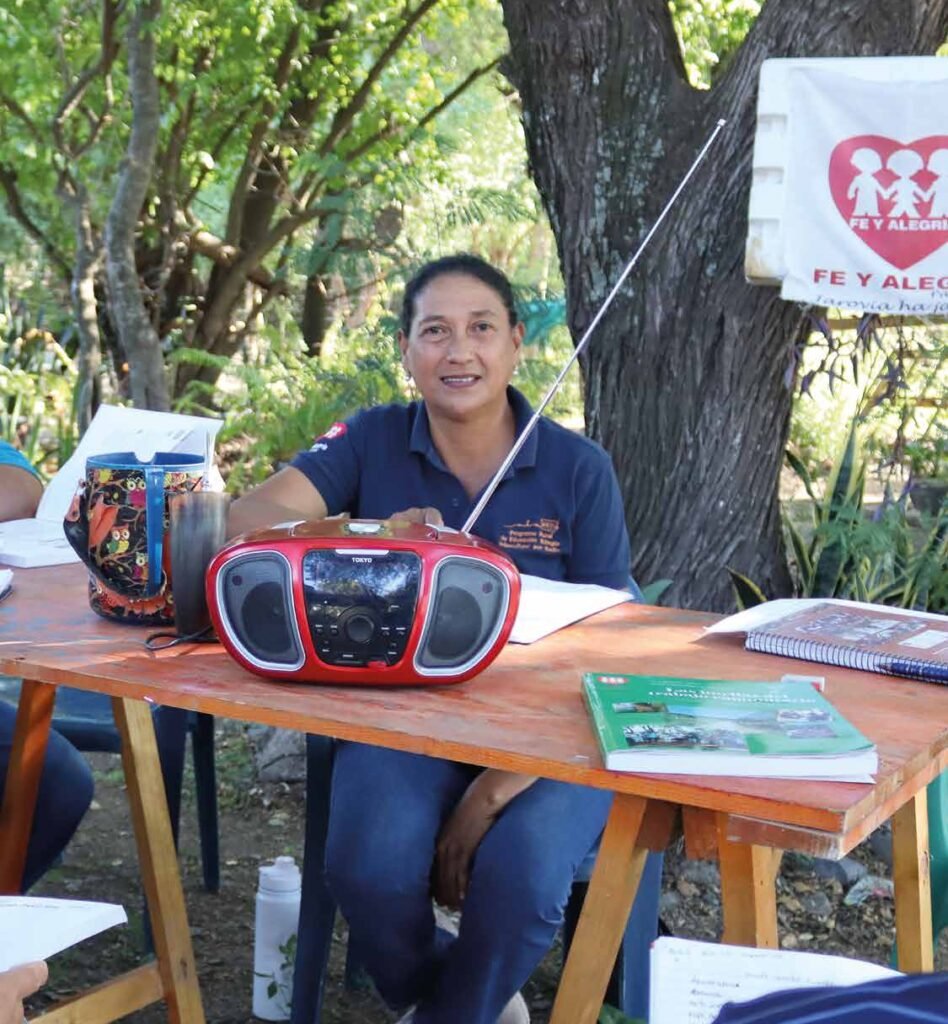
Fe y Alegría Nicaragua is a movement of popular education and social development founded in 1974 and a work of the Society of Jesus. Its mission is to make quality education a reality for children, young people, and communities living on the margins, forming critical, autonomous people committed to transforming their communities. It is part of the International Federation of Fe y Alegría, which works in more than 20 countries.
Today Fe y Alegría Nicaragua accompanies a network of 297 schools serving nearly 70,000 students and their families, including schools it runs directly and schools belonging to the dioceses of Bluefields, Siuna, Estelí, Managua, and Granada. It also leads the Federation’s regional Gender Initiative, which coordinates work on gender equity across Fe y Alegría’s member countries.
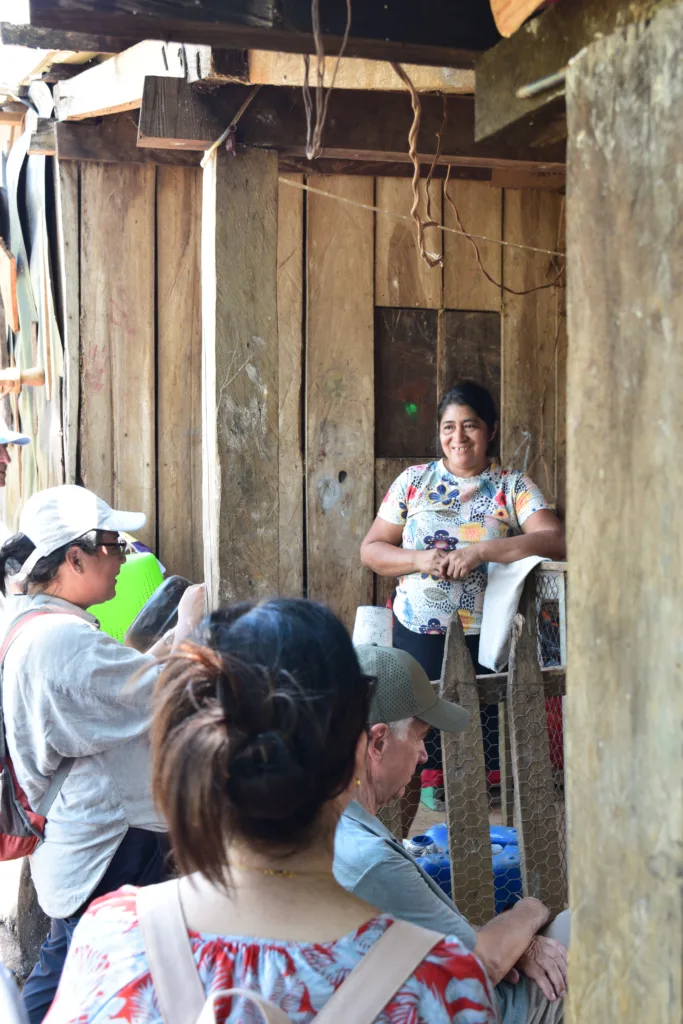
For more than nine years, Fe y Alegría Nicaragua has partnered with the Diocese of Bluefields, which runs the 63 schools in this project. In areas where public services are thin, the Diocese has long been a trusted presence for families, and its relationships make community-wide participation possible. Fe y Alegría staff live in El Rama and Nueva Guinea, allowing them to accompany schools throughout the year.
Our Project
American Jesuits International is partnering with Fe y Alegría Nicaragua to improve the quality and safety of education in 63 rural primary schools in the municipalities of El Rama and Nueva Guinea. Most are multigrade or single-teacher schools, where one teacher may lead several grades at once — often without formal teacher training, but with deep roots in the community. The project reaches 1,126 students ages six to 15, including 534 girls, and their 66 teachers, 37 of whom are women. It works on two fronts.
Stronger Teaching and Foundational Learning
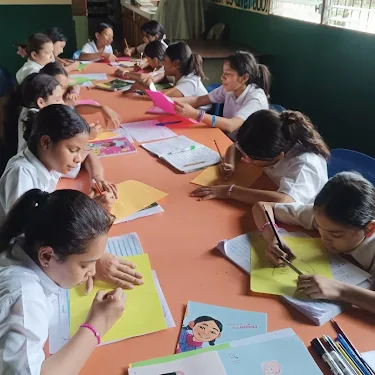
- Six municipal workshops train teachers and school leaders in active, student-centered methods, including problem-based learning, critical thinking, and social-emotional learning.
- Regular peer-learning gatherings, held with the Ministry of Education, allow teachers from isolated schools to share what is working.
- Fe y Alegría staff make 126 classroom mentoring visits, observing lessons and helping teachers plan and assess learning.
- Every school receives desks, whiteboards, reading books, and teaching materials.
- A new learning assessment tracks students’ progress in critical thinking, problem-solving, and social-emotional skills.
Safe, Inclusive, and Violence-Free Schools
- Each school forms a Coexistence Committee, trained in violence prevention, protection referral pathways, and basic psychosocial support.
- Each school develops and puts into practice its own Coexistence Action Plan and protection protocols.
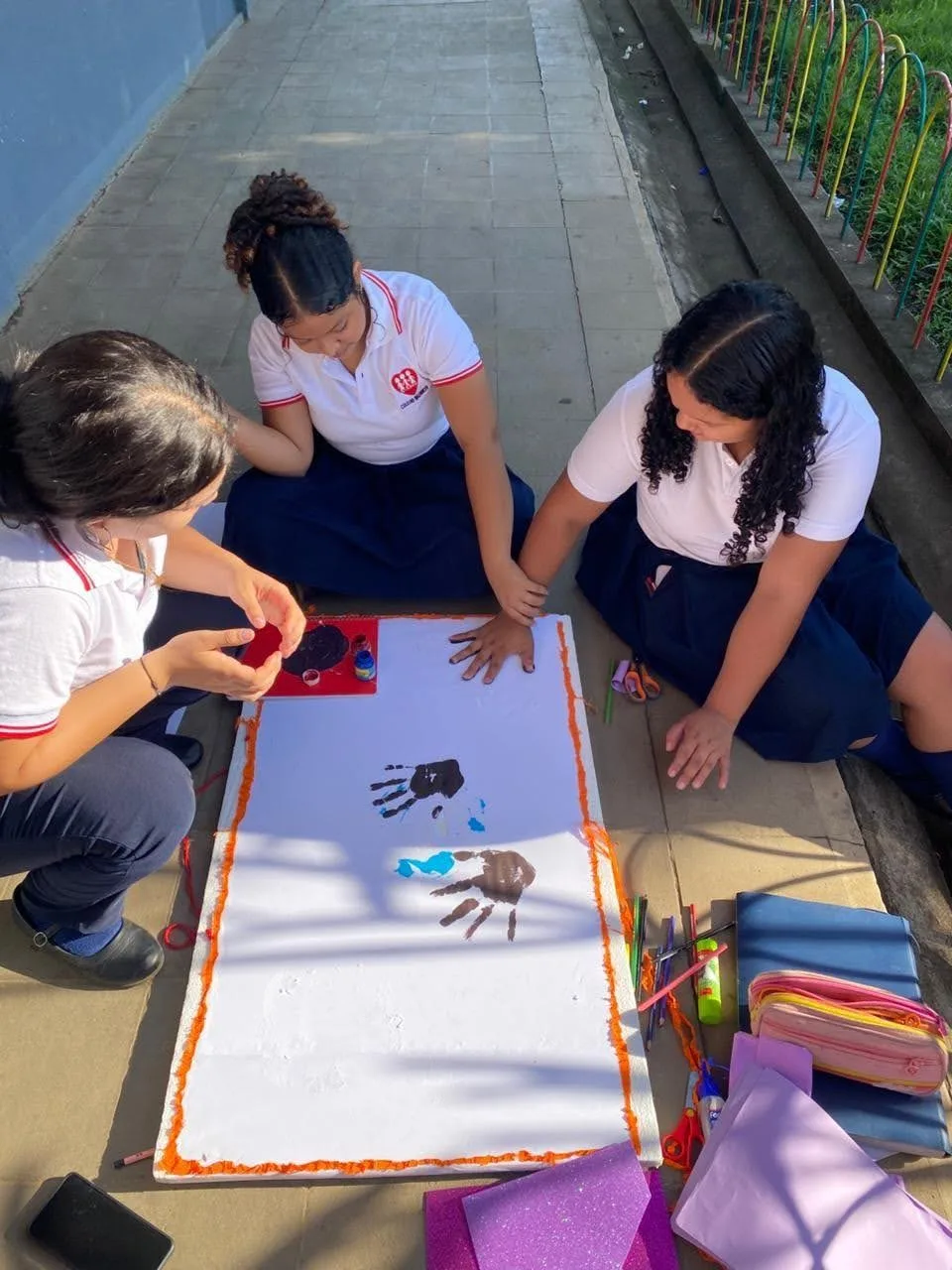
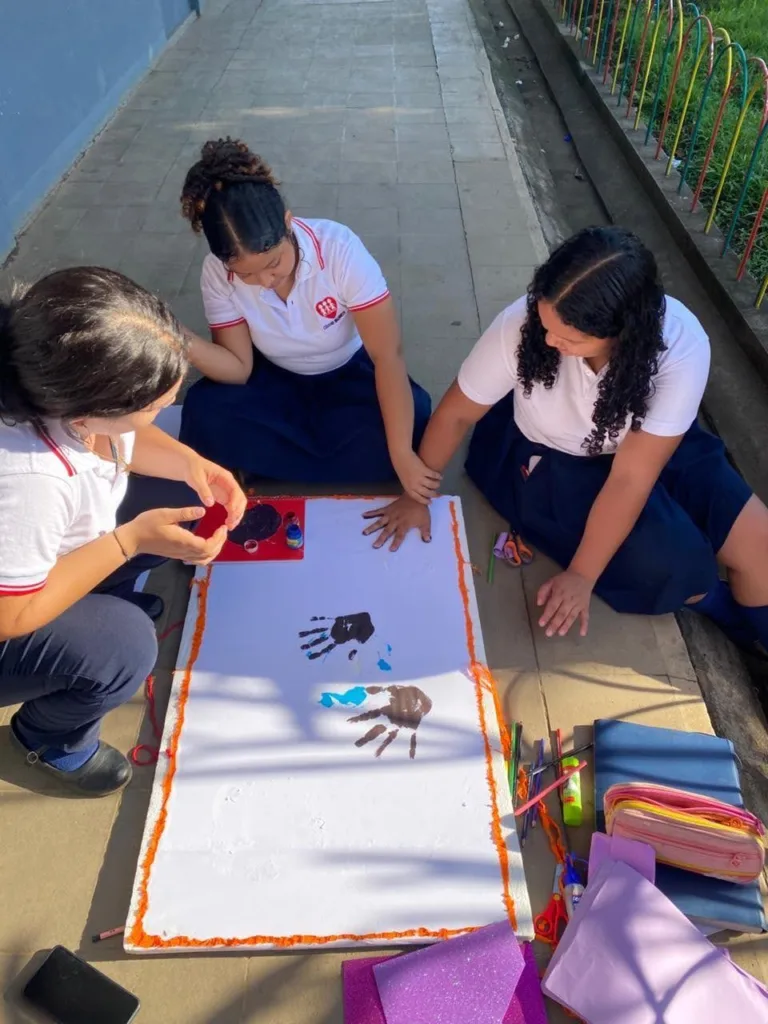
- Murals, festivals, and school events promote a culture of peace, self-care, and gender equality.
- Workshops with families focus on positive parenting, gender equality, and shared responsibility for children’s safety.
- School and community campaigns cover disaster preparedness for hurricanes, floods, and landslides, along with preventive health.
- Fe y Alegría staff make 126 additional visits to help schools carry out their coexistence plans.
The project runs for 12 months and is woven into each school’s annual plan, so that changes outlast the funding period.
By the Numbers
- Schools: 63 rural primary schools, most multigrade or single-teacher
- Students: 1,126 children ages six to 15 (534 girls, 592 boys)
- Teachers: 66 (37 women, 29 men)
- Family members reached: about 4,500, based on an average household of five
- Mentoring visits: 252 school visits across teaching and school-safety components
- Goals by project end: at least 70% of students showing satisfactory or better critical-thinking and social-emotional skills, and at least 44 schools with coexistence plans and protocols in place
Why Safe Schools Matter for Girls
In the communities this project serves, distances are long, and many girls face risks on the way to and from school. Many also grow up hearing that their role is to serve others first. Fe y Alegría Nicaragua’s analysis finds that these beliefs take hold early — between ages six and 12 — and often appear as shyness, anxiety, low academic confidence, and fear of speaking up in class.
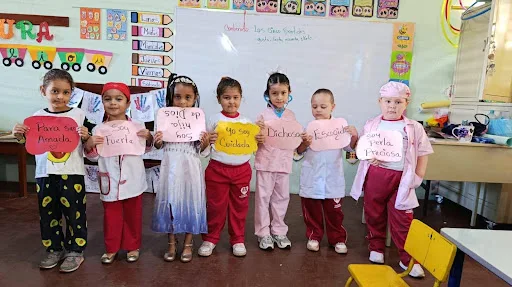
That is why this project treats learning and protection as one goal. When teachers are trained to recognize and respond to violence, when every school has a committee and a plan to protect children, and when families take part in conversations about equality, girls can stay in school, participate fully, and build the confidence to lead. It is also why the project works with boys, helping them develop healthy ways to handle emotions and conflict.
In Their Own Words
Fe y Alegría Nicaragua’s work to create safe schools builds on lessons from our earlier partnership on its Luz de las Niñas (The Light of Girls) program. Angelina, a 13-year-old eighth-grader, took part in that program in 2025.
“Before, I was the girl who spoke so softly you could barely hear me, who looked down as soon as someone asked me something, and who ran to lock myself in my room as soon as I got home,” Angelina said. “Now I feel more encouraged than ever. I laugh out loud, I talk to my classmates and my teachers without fear, and I truly know that I am very special.”
What she learned has changed her home, too. “There’s no more ‘it’s your job because you’re a woman.’ Now all of us — my sisters and my parents too — share the chores evenly, because that’s what’s fair,” she said. “Now I know my voice matters, and that speaking up makes me stronger.”