Context
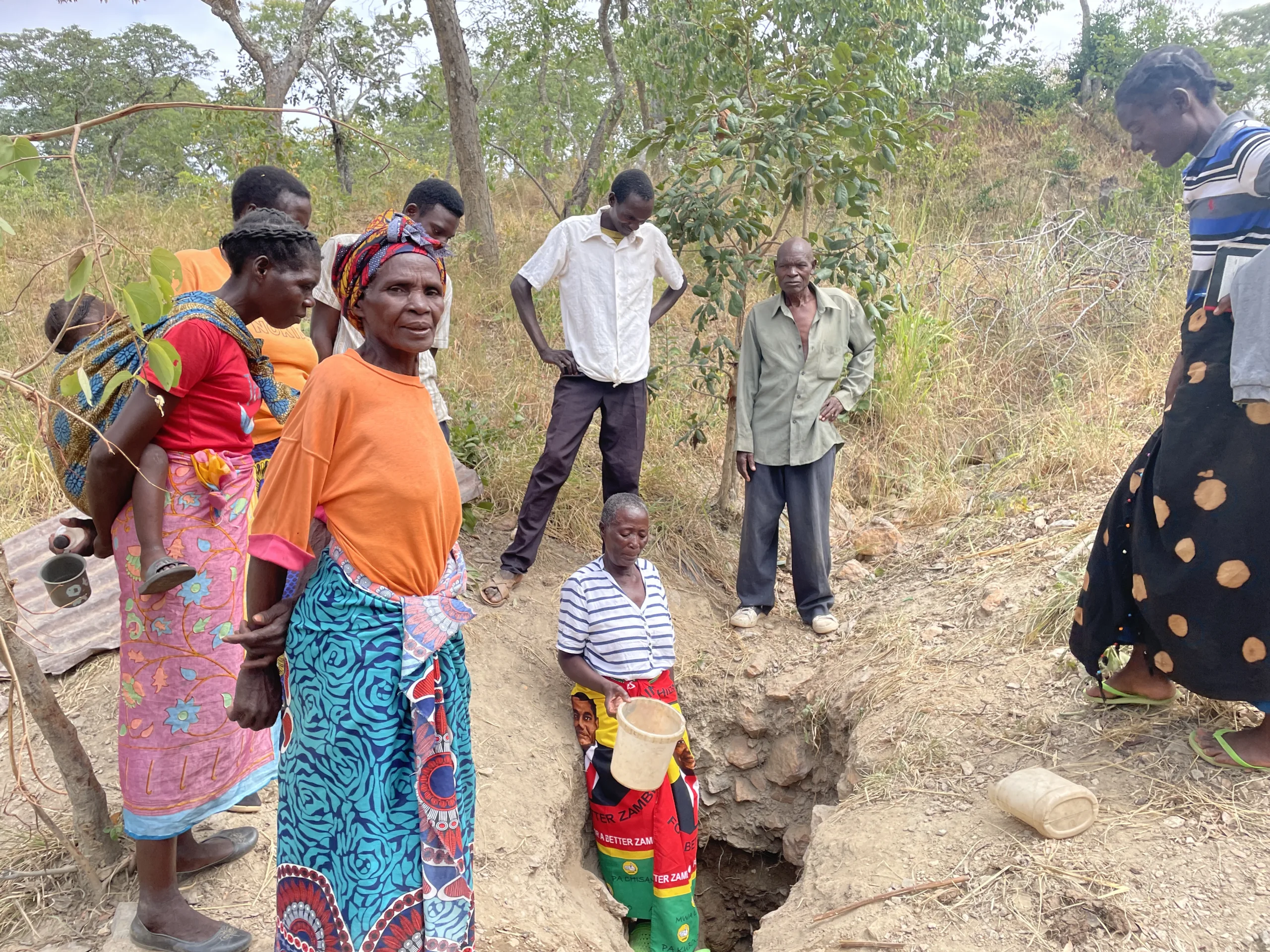
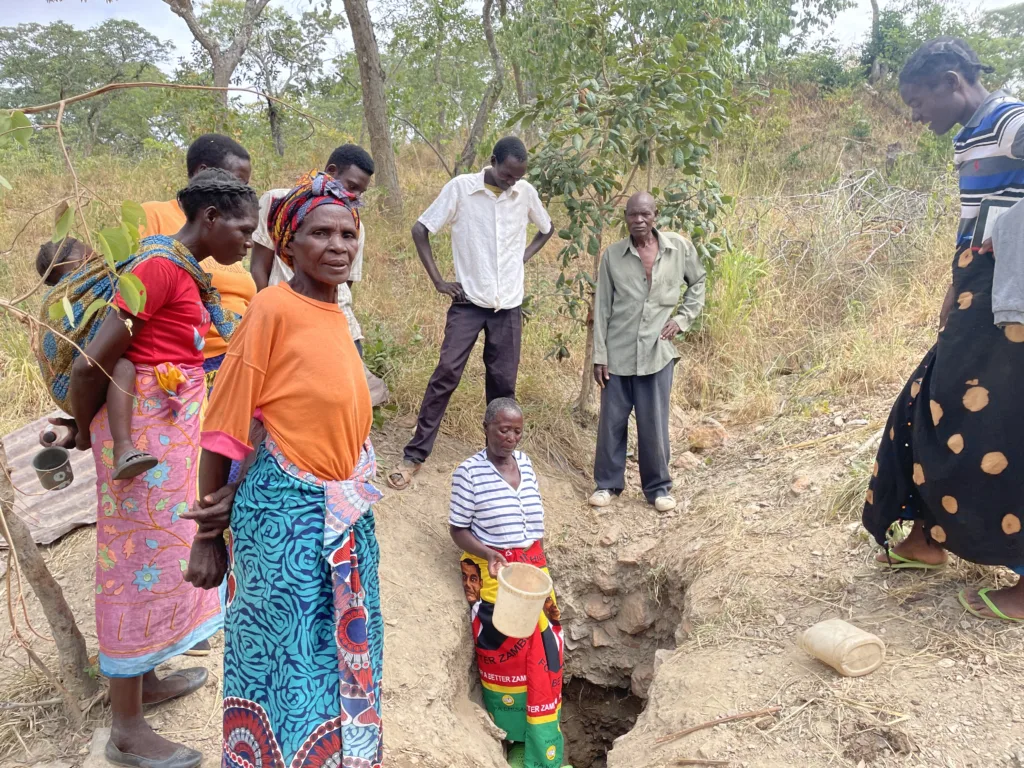
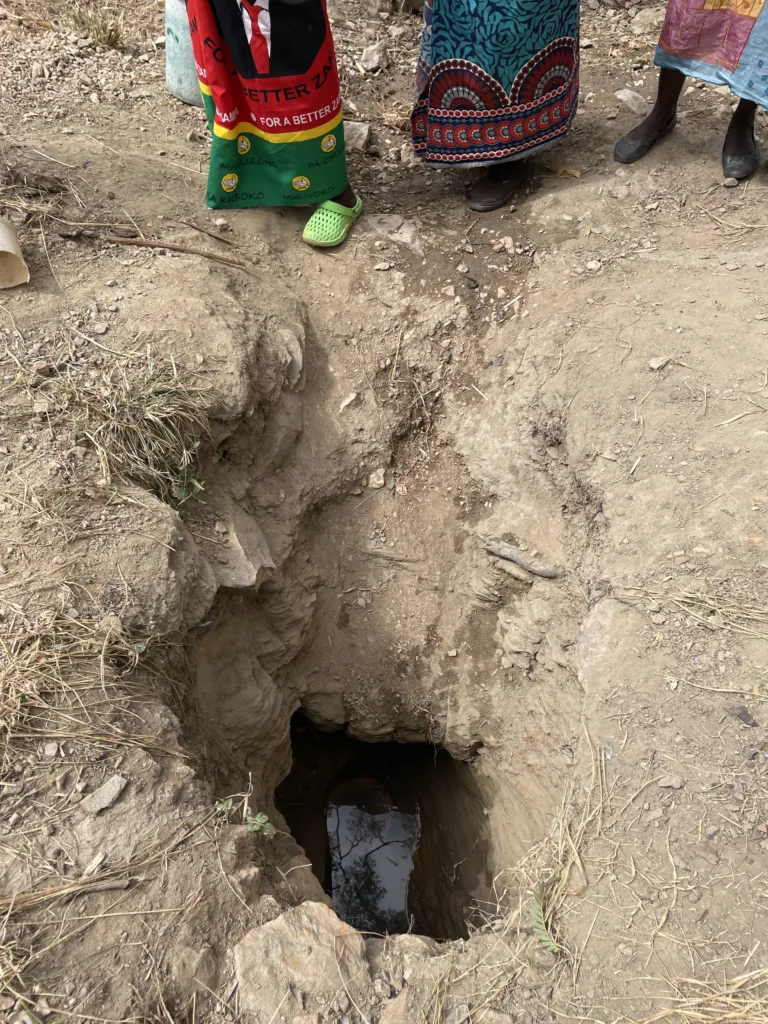
The 2023–2024 drought in Zambia was one of the most severe in decades, devastating rural communities and leaving families without reliable access to clean drinking water. Chikuni and Kanakantapa, where the Jesuits have active parishes, faced sustained water shortages. In villages like Kalisowe, located 46 miles from Chikuni Mission, residents have been forced to walk up to 20 miles a day in search of water, often relying on sources shared with animals.
The burden falls hardest on women and children, who carry the primary responsibility for collecting water each day — a task that puts their health and safety at risk and keeps children out of school. With many wells dried up, families are left with few safe alternatives.
Kalisowe sits in a remote part of Zambia’s Southern Province, about 35 miles southeast of Monze and 46 miles from Chikuni Mission, the historic site where Christianity was first introduced to Zambia. Most households rely on subsistence farming, growing rain-fed crops such as maize and groundnuts for their own consumption. Recurring droughts and shifting rainfall patterns have strained the region for years, deepening food insecurity and weakening rural livelihoods.
About the Southern Africa Province of the Jesuits
The Southern Africa Province (SAP) of the Society of Jesus was formed in 2021, when Superior General Fr. Arturo Sosa, S.J., united the former Dependent Region of South Africa with the Provinces of Zambia-Malawi and Zimbabwe-Mozambique. Led by Provincial Superior Fr. Leonard Chiti, S.J., and headquartered in Lusaka, Zambia, SAP today serves nine countries: South Africa, Namibia, Lesotho, Botswana, Eswatini, Zambia, Malawi, Mozambique, and Zimbabwe.
Guided by its Apostolic Strategic Plan (2024–2030), SAP is dedicated to fostering unity and collaborating with partners to promote reconciliation and justice. Priority 4 of that plan calls the Province to respond to “the cries of the earth and the poor” — a commitment this project reflects directly.
Jesuits have deep roots in this part of Zambia: Chikuni Mission, near Kalisowe, is the historic site where Christianity was first introduced to the country, and Jesuits still maintain a monthly presence there, celebrating Mass and offering pastoral care alongside local village leadership.
Our Project
With support from the Loyola Foundation, American Jesuits International and the Southern African Province are constructing two mechanized boreholes in Kalisowe, each equipped with a solar-powered pump and a water storage tank, to provide safe, reliable water for the community.
This project is part of a larger effort: the Province is drilling 15 boreholes across the Chikuni and Kanakantapa regions, aiming to reach more than 45,000 people with dependable, clean water. The two Kalisowe boreholes will directly serve approximately 4,600 people, including 160 students and 23 teachers, easing the daily burden on women and children and ensuring that both households and livestock have the water they need to sustain their lives and livelihoods.
The project is expected to be completed within 12 months. Community assessments and consultations are already complete, and Zambia’s Ministry of Water and Sanitation is providing technical support throughout construction.
By the Numbers
- Direct beneficiaries: approximately 4,600 people, including 160 students and 23 teachers
- Boreholes in Kalisowe: two, each with a solar-powered pump and storage tank
- Broader regional initiative: 15 boreholes planned across Chikuni and Kanakantapa, reaching more than 45,000 people
- Anticipated completion: 12 months
How It Works
- Community assessments and consultations in Kalisowe and neighboring Nakabwe are already complete.
- Zambia’s Ministry of Water and Sanitation is providing technical support for the drilling and installation.
- Local leadership — village headmen and councilors — is guiding coordination and implementation on the ground.
- Jesuits maintain a monthly presence in the area, celebrating Mass and offering pastoral care, strengthening trust and community ownership throughout the project.
Why Solar-Powered Boreholes?
Many of the shallow wells that once served Kalisowe have dried up amid Zambia’s worsening drought. Mechanized boreholes reach deeper, more reliable groundwater, and solar-powered pumps keep them running without depending on costly, hard-to-access fuel. Paired with storage tanks and tap stands, they give the community a dependable water source even as rainfall grows less predictable — for both families and the livestock many depend on for their livelihoods.