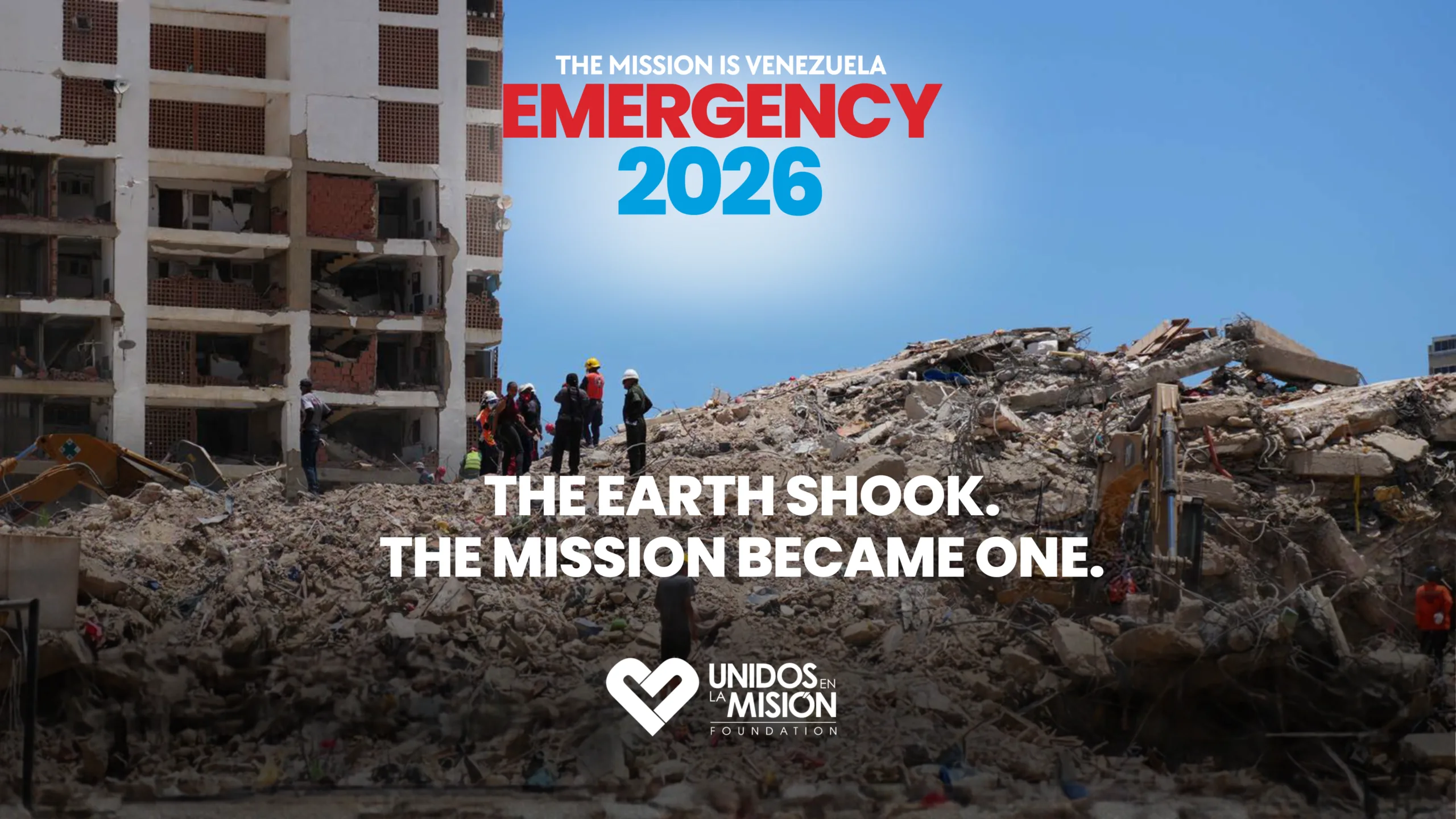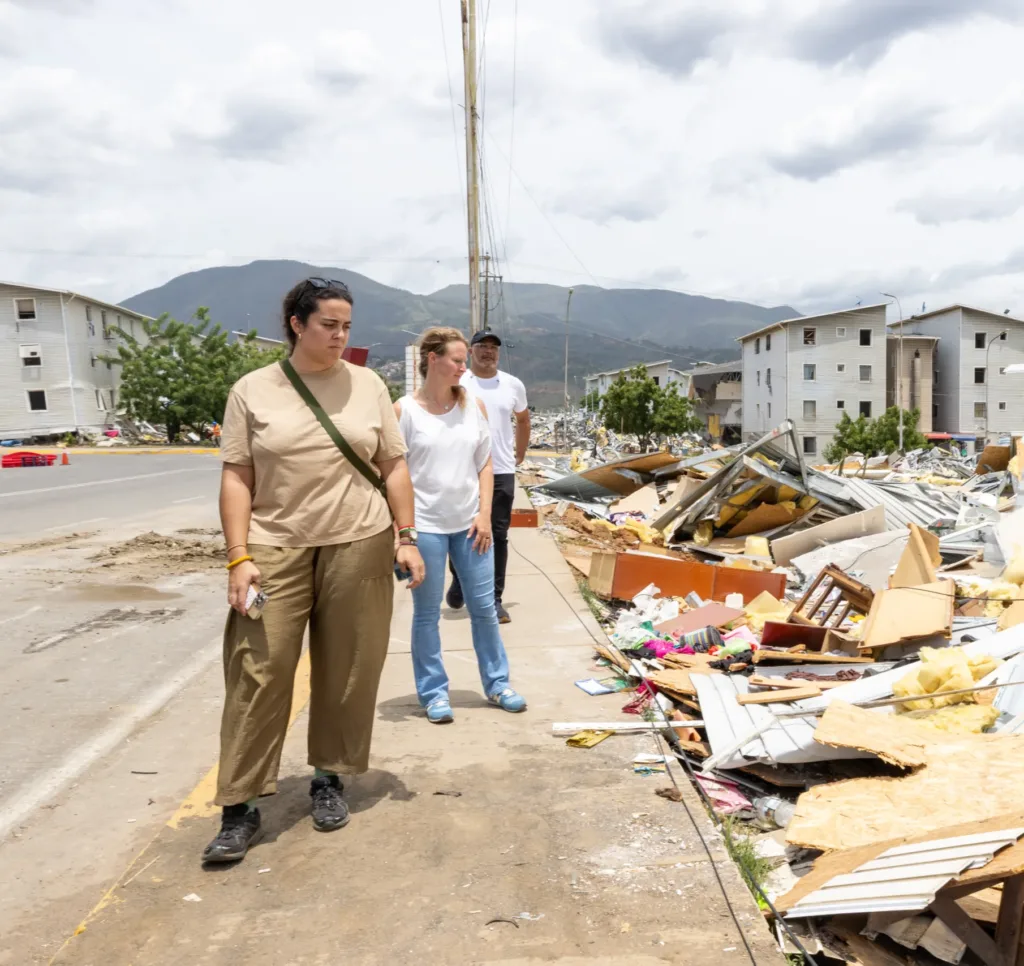
On July 9, I was in Caraballeda, one of the areas most affected by the earthquakes that struck Venezuela a month and a half ago, accompanying the response of the Xavier Network and our local partner organizations. The devastation was still evident and difficult to explain to someone who has not lived through it. After several hours walking through the area—amid debris, collapsed buildings, and makeshift camps—the vulnerability that we witnessed at every step was overwhelming.
There were places where nothing could be heard, only an attentive silence. Rescue teams who were still searching for signs of life beneath the concrete. In other areas, the silence was one of discouragement; people sitting on the edge of the street, watching what was left of their homes while waiting for news about their relatives.
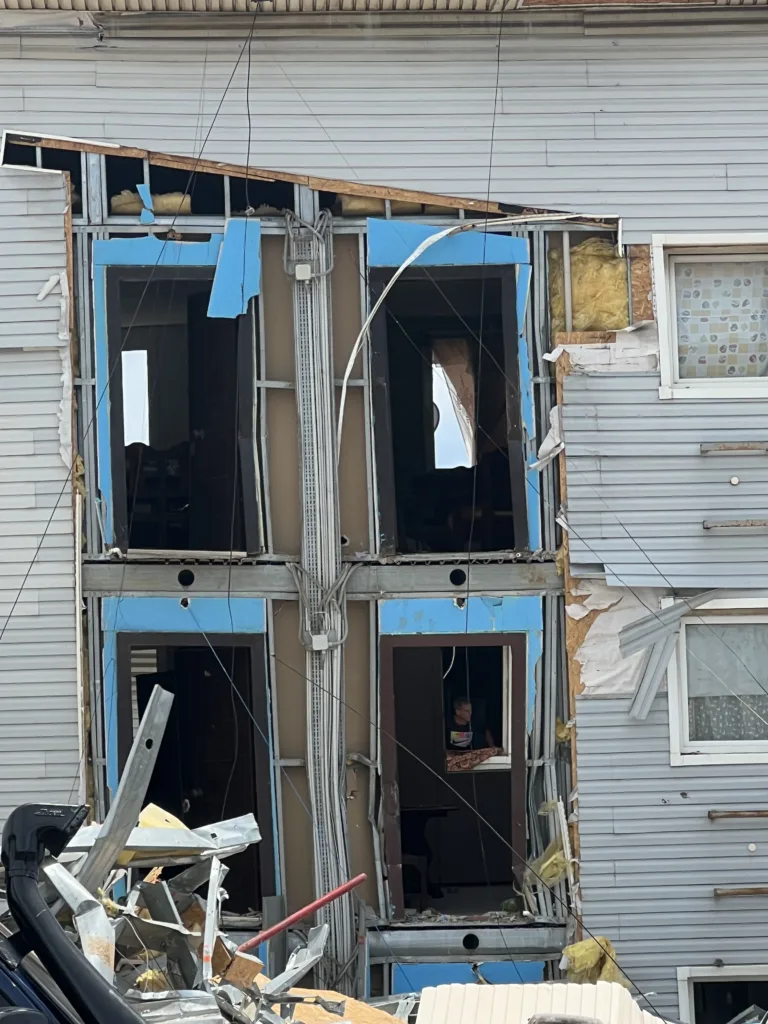
In the middle of that walk, my eyes caught a scene that, although simple, spoke about what it means to live through a crisis. Through the window of a visibly damaged building, I saw a man shaking out a dusty rug. At first, I thought that perhaps his home had held up better than others. But as I drew closer, I could see that the building he was in had bent and seriously compromised columns. Even so, he was trying to clean his house and recover some sense of order amid the chaos.
That image made me think about how Humanitarian Action is defined. When we study the theory, we learn that Humanitarian Action is “the set of interventions aimed at saving lives, alleviating suffering, and protecting the dignity of people affected by crises, wars, or natural disasters.” That definition is correct and ambitious, but beyond a paradigm or a “humanitarian mantra,” it must be a motto that translates into tangible actions for governments and donors as well.
In Venezuela, as in so many other emergency contexts, the question is not solely whether people are physically safe from harm. It is also necessary to ask what conditions they are living in while that emergency continues to unfold. When I think of places experiencing a crisis, distant locations like Venezuela, Ethiopia, or Ukraine come to mind. I also recall emergencies that are closer to home, such as migrant detention centers in Spain, Malta, and so many other European countries. In all these places, it is common to see entire families sharing a single tent, clothes “stored” in garbage bags, 10 or 15-minute lines to access a bathroom or shower… these are scenes that show that protecting life is not always enough if minimum conditions of dignity are not also cared for.
That is why the scene of a man cleaning a rug felt so significant to me. In an environment marked by structural damage and uncertainty, that gesture represented an attempt to regain normalcy, to maintain daily habits, and to preserve some control over his own space. It also reminded me of the extent to which dignity is part of the humanitarian response. People do not only need shelter, water, or medical attention; they also need to retain the ability to make decisions, to maintain their privacy, to preserve control over their lives, and to be treated as human beings, not merely as aid beneficiaries.
Humanitarian action, in that sense, is not solely about saving lives. It also involves taking on a commitment to the dignity of those going through a crisis. That commitment demands presence, sensitivity, and careful attention to the conditions under which aid is provided—in addition to the resources offered. Working alongside an affected population should not be limited to covering basic needs: it should be done in a way that respects their autonomy, their history, and their place in the community.
On a date like World Humanitarian Day, it is worth remembering that a humanitarian response is not measured only by its capacity to address the immediate emergency, but also by its capacity to do so without losing sight of the people behind every need. Therefore, sustaining humanitarian action is neither a secondary option nor a gesture of goodwill that we can isolate or compartmentalize only for those crises that make the news. It is a shared responsibility. It requires resources, coordination, political will, and sustained support over time. It also requires defending humanitarian space, protecting those who work in it, and understanding that their labor does not end when the cameras turn off or when the emergency stops making headlines.
Humanitarian action needs to be backed precisely because it operates at that point where immediate urgency intersects with daily life, with rights, and with people’s capacity to rebuild what they have lost. Wherever there is a tent, a family waiting for news, or someone trying to clean their home in a damaged building, there is also a fundamental question: do we want to limit our response to survival, or are we willing to defend dignity?