Context
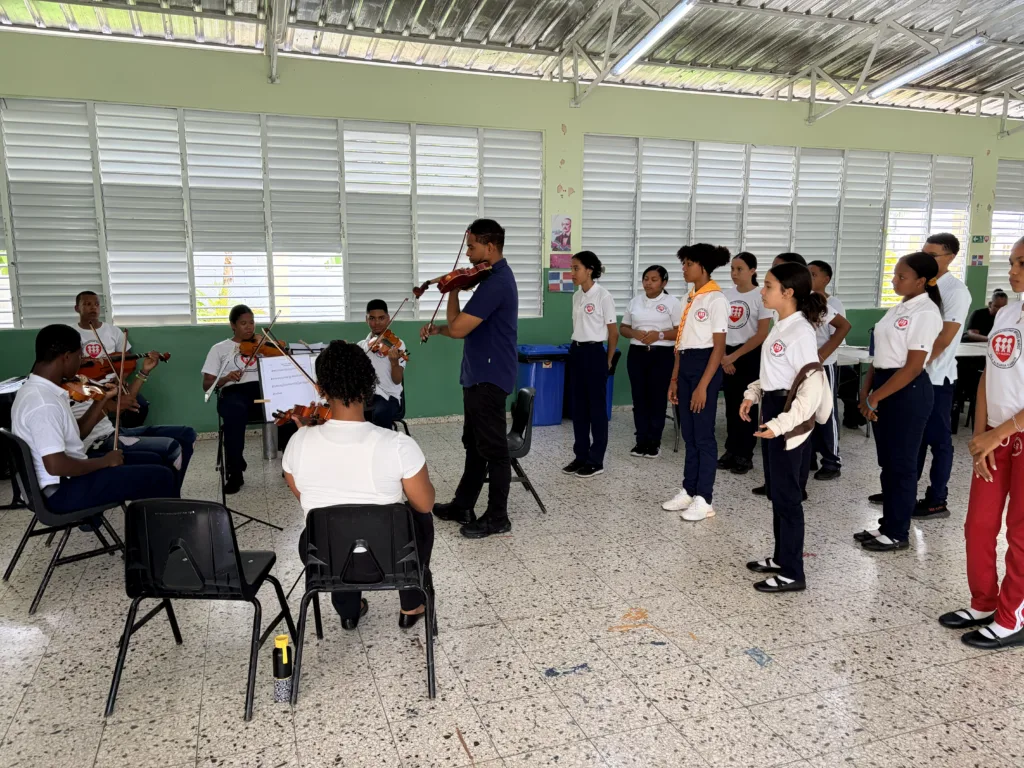
In the Dominican Republic, children and adolescents growing up in low-income urban and semi-urban communities face real barriers to creative expression, personal development, and social inclusion. Public schools in these neighborhoods often lack the instruments, trained instructors, and rehearsal space that structured arts education requires, so musical talent can go undiscovered simply because no one has the chance to pick up an instrument.
Fe y Alegría Dominicana, set out to change that in 2011. That year, the late Fr. Antonio “Ton” Lluberes, S.J., then National Director of Fe y Alegría Dominicana, founded the Fe y Alegría Youth Philharmonic, inspired by El Sistema, the renowned Venezuelan model of collective music education founded by José Antonio Abreu.
Sustaining that vision proved difficult. The program was paused for lack of funding, then was momentarily revived only to be interrupted again by the COVID-19 pandemic. By 2025, new donors had helped it restart on a small scale, and Fe y Alegría was ready to grow it again — this time with the goal of making music a lasting part of its schools rather than an occasional opportunity.
Why Music Education?
Music for Social Change is built on the belief that music is a universal right and a powerful way of affirming human dignity. Learning to play in an orchestra or sing in a choir does more than teach notes and rhythms. It develops concentration, discipline, logical reasoning, and emotional intelligence, and it gives young people a healthy outlet for self-expression.
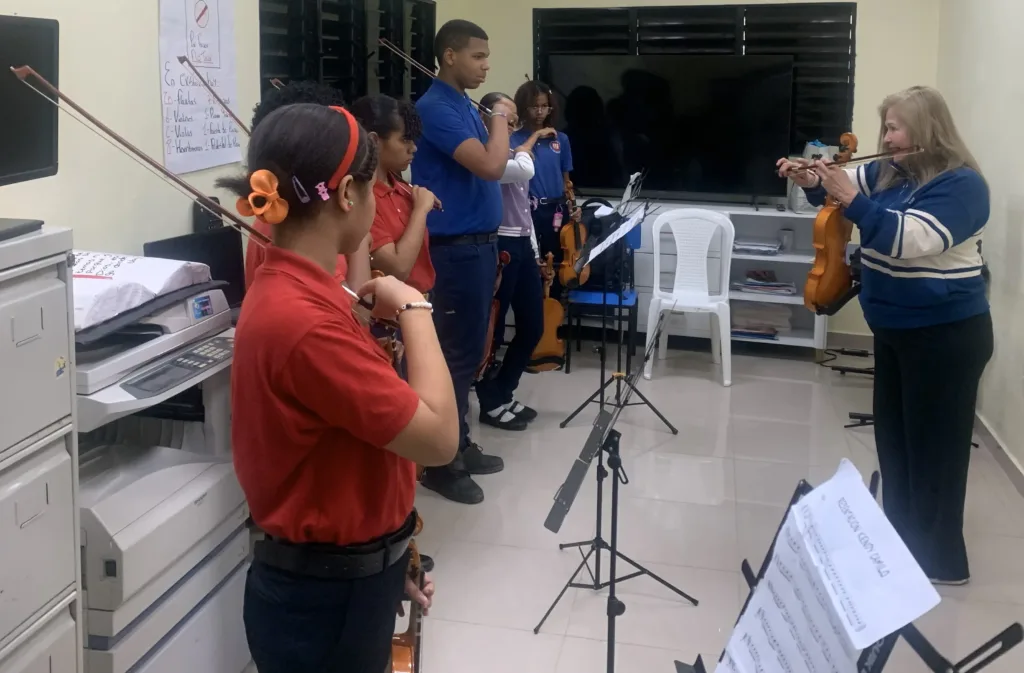
Because students learn together, collective music education also builds what a community needs to thrive: teamwork, communication, cooperation, and a shared sense of belonging and responsibility. Each musician depends on the others, and every concert is something they achieve together. In neighborhoods marked by poverty and exclusion, rehearsals become safe, welcoming spaces that contribute to a broader culture of peace.
The benefits reach the classroom, too. Fe y Alegría’s teachers have found that students who keep up consistent music practice as their schoolwork grows more demanding also tend to perform well in other subjects. And structured music education uncovers talent that might otherwise go unnoticed, opening paths, such as admission to the National Conservatory of Music, that many of these young people never imagined were within reach.
Our Project
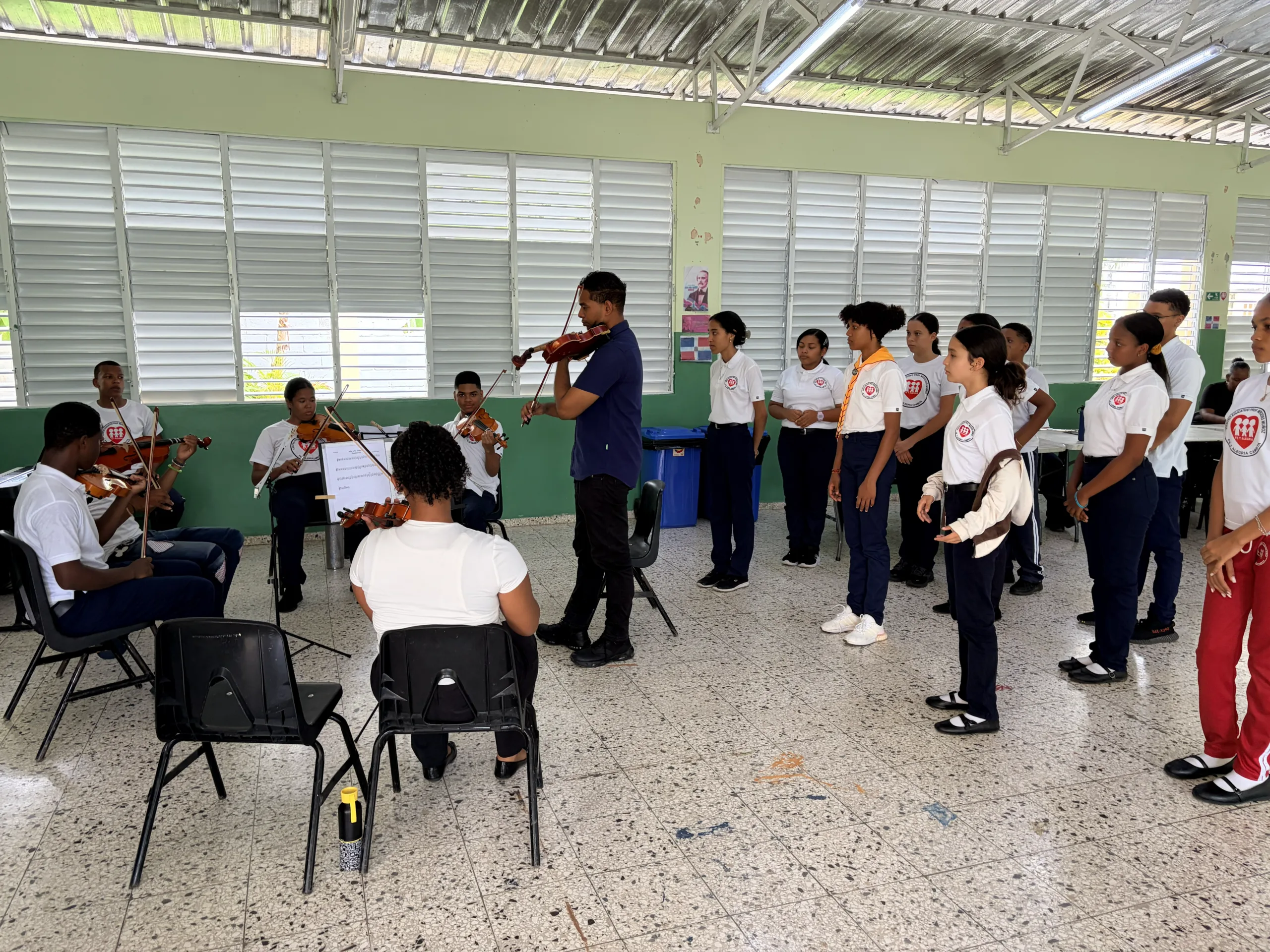
With support from the Pulte Family Charitable Foundation, American Jesuits International partnered with Fe y Alegría Dominicana from July 2025 to July 2026 to strengthen and expand Music for Social Change. Originally planned to serve 210 students in 11 schools, the program grew over the year to reach 587 students and 33 music teachers across 16 Fe y Alegría educational centers. Music teachers are affiliated with the Ministry of Education, and the program also drew on support from the Siman Orchestral Foundation (SIMANOF), which provides teacher training, technical assistance, and evaluation of teaching practices. The project worked on three fronts.
Building a Structured Orchestral Program
- New clarinets, saxophones, trombones, violins, an electric bass, recorders, and two pianos were distributed among five educational centers.
- String and brass instruments were repaired and maintained, and accessories, sheet music, and materials were purchased to extend the life of existing instruments.
- Regular meetings with music teachers and school principals strengthened coordination, set aside class time for music, kept instrument inventories up to date, and adapted learning spaces to students’ ages and levels.
- Teachers began meeting monthly with SIMANOF for ongoing guidance and support.
Opening Doors for Students and Teachers
- The Sinfonía Juvenil (Youth Symphony) summer camp brought together about 75 children for five days of intensive training, and workshops were held at four educational centers.
- Six program graduates were admitted to the Conservatorio Nacional de Música (National Conservatory of Music).
- Two students joined the SIMANOF New York 2025 Orchestral Tour, December 15–20, 2025, performing at a Christmas concert at Riverside Theatre alongside young musicians from around the world. On their return, they shared what they had learned with the Minister of Education.
- Three teachers and one graduate took part in the Berklee program in Santo Domingo in January 2026, and two of the teachers earned 50% scholarships to continue their studies at Berklee College of Music.
Bringing Music to the Community
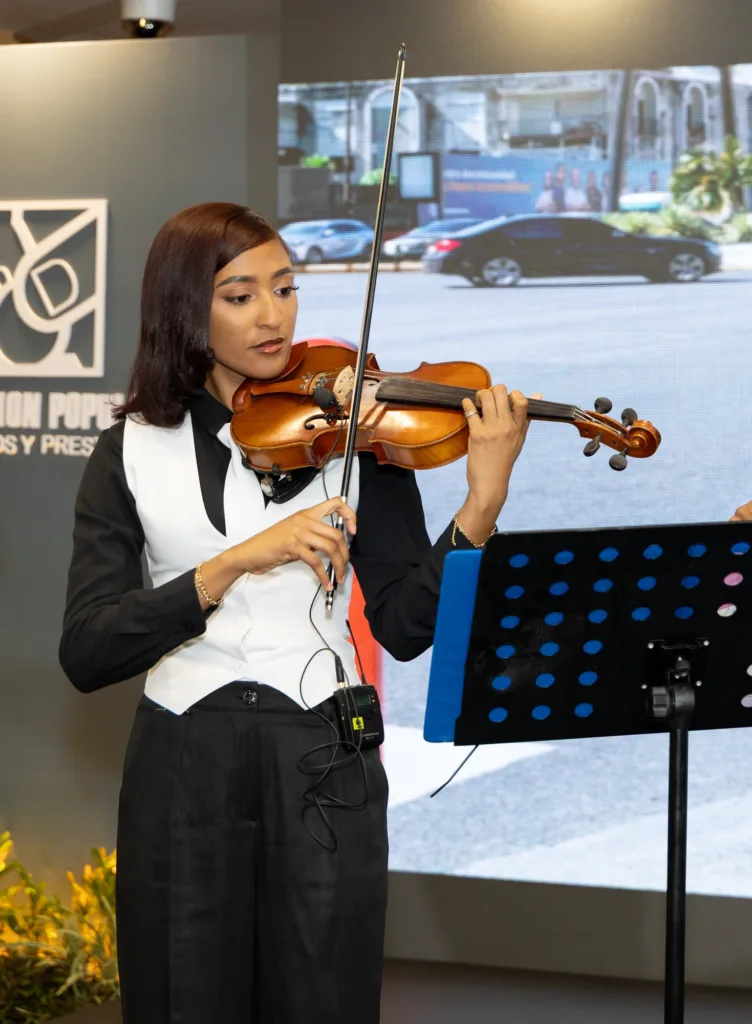
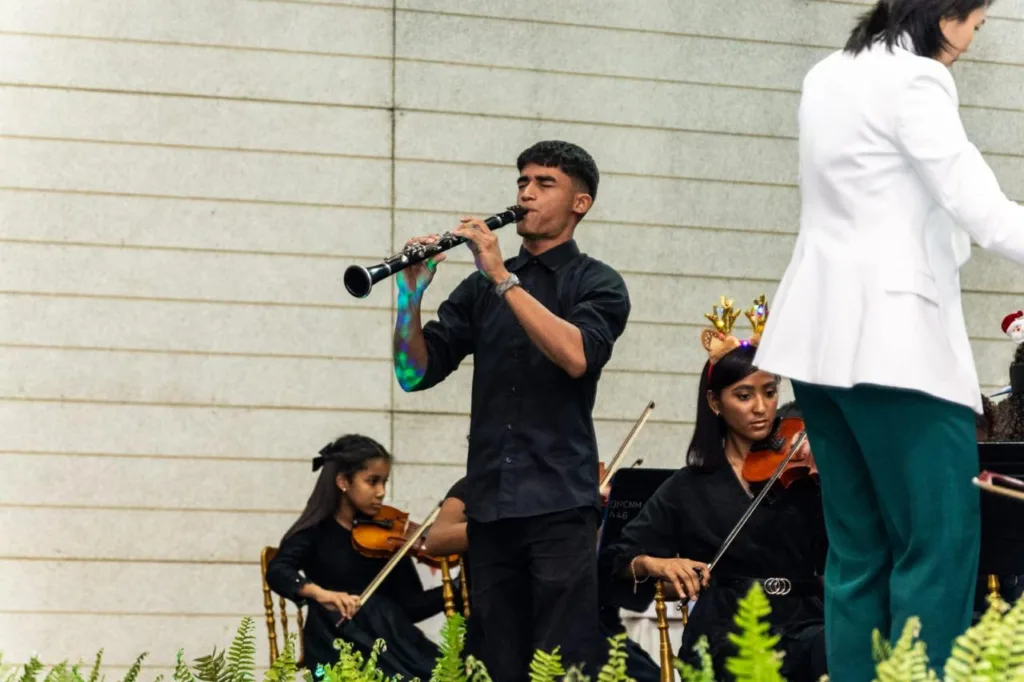
- On December 10, 2025, the Fe y Alegría Youth Philharmonic Orchestra performed “35 años educando con el corazón” (35 Years Educating with the Heart) for Fe y Alegría’s anniversary, featuring a clarinet and violin duet by two program graduates and a 40-voice choir of students ages 10 to 17 from the Los Mameyes and San José educational centers.
- The orchestra performed at the Aprendo 2025 Congress and on national television programs including Esta Noche Mariasela, Extremo a Extremo, and El Pulso de la Mañana.
- The San José Fe y Alegría Choir sang at the interfaith Easter devotional Él Vive (He Lives) at the Autonomous University of Santo Domingo (UASD), and students at Liceo en Artes Astín Jacobo presented the gala Travesías del Arte (Journeys of Art).
A Model That Sustains Itself
One of the program’s most meaningful results is that it is beginning to renew itself from within. During the project, three more graduates became classroom facilitators, bringing to 11 the number of young people trained through Music for Social Change who now help teach and support students in Fe y Alegría schools. Some have returned to the very schools where they first learned to play, becoming role models for the next generation.
The program has also gained national recognition as an example of how high-quality arts education can reach children in vulnerable communities through the public school system, opening the door to new partnerships. Along the way, Fe y Alegría learned that arts programs last when they are built into the life of the school — with clear pedagogical guidance, administrative support, and ongoing technical assistance — while staying flexible enough to respond to each community’s needs.
Results
- People served: 655, including 587 students and 33 music teachers
- Educational centers: 16 across the Dominican Republic (up from 11 planned)
- Graduates admitted to the National Conservatory of Music: six
- Graduates now serving as classroom facilitators: 11
- Teachers awarded Berklee College of Music scholarships: two
- Summer camp participants: about 75
In Their Own Words

Roberto Capellán first picked up the clarinet at the Centro Educativo La Inmaculada in Los Frailes, a neighborhood in Santo Domingo Este. Through Music for Social Change, he went on to earn admission to the National Conservatory of Music and to tour Germany and New York City with SIMANOF.
He says the biggest change in his life has been his self-confidence. “Fe y Alegría creates opportunities and opens paths where there once seemed to be none,” Roberto said.